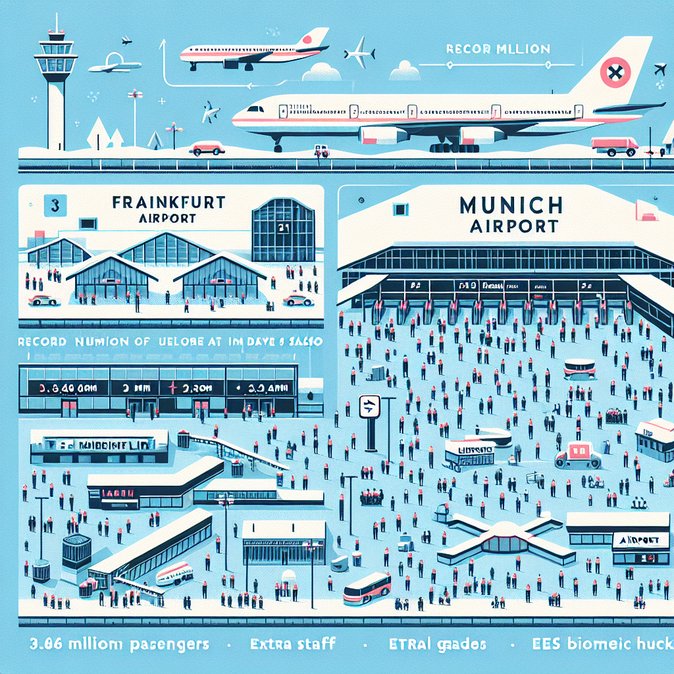
Germany’s two largest hubs are forecasting their busiest festive season since 2019, underscoring the post-pandemic rebound in leisure and visiting-friends-and-relatives (VFR) traffic. Fraport expects 3.6 million passengers between 19 December 2025 and 11 January 2026, with today, 20 December, set to hit a single-day high of 178,000. Munich Airport projects almost two million passengers over a similar window.
Airport operators have re-opened seasonal gates, redeployed HQ staff to security lanes and coordinated with the Bundespolizei to add extra EES kiosks for non-EU travellers. Nevertheless, they urge passengers to arrive at least two hours early for intra-Schengen flights and three hours for long-haul departures.
![Frankfurt and Munich Brace for Record Holiday Passenger Volumes]()
The surge coincides with Deutsche Bahn’s annual timetable change, which adds capacity on key trunk routes but also compresses overnight engineering works, increasing the risk of knock-on delays. Corporate mobility teams should advise flexible travel dates, secure rail seat reservations in advance and issue digital parking passes to staff driving to the airport.
From a duty-of-care standpoint, companies should activate real-time alerting so travellers can re-route quickly if weather or congestion disrupts schedules. Forecasts indicate possible snow in southern Germany on 23–24 December, a factor that could exacerbate already tight ground-handling operations.
While airport executives celebrate the demand rebound, they acknowledge that 2025’s EES learning curve and patchy staffing levels mean true pre-COVID efficiency may not return until summer 2026.
Airport operators have re-opened seasonal gates, redeployed HQ staff to security lanes and coordinated with the Bundespolizei to add extra EES kiosks for non-EU travellers. Nevertheless, they urge passengers to arrive at least two hours early for intra-Schengen flights and three hours for long-haul departures.
The surge coincides with Deutsche Bahn’s annual timetable change, which adds capacity on key trunk routes but also compresses overnight engineering works, increasing the risk of knock-on delays. Corporate mobility teams should advise flexible travel dates, secure rail seat reservations in advance and issue digital parking passes to staff driving to the airport.
From a duty-of-care standpoint, companies should activate real-time alerting so travellers can re-route quickly if weather or congestion disrupts schedules. Forecasts indicate possible snow in southern Germany on 23–24 December, a factor that could exacerbate already tight ground-handling operations.
While airport executives celebrate the demand rebound, they acknowledge that 2025’s EES learning curve and patchy staffing levels mean true pre-COVID efficiency may not return until summer 2026.
Source: VisaHQ Global Mobility News