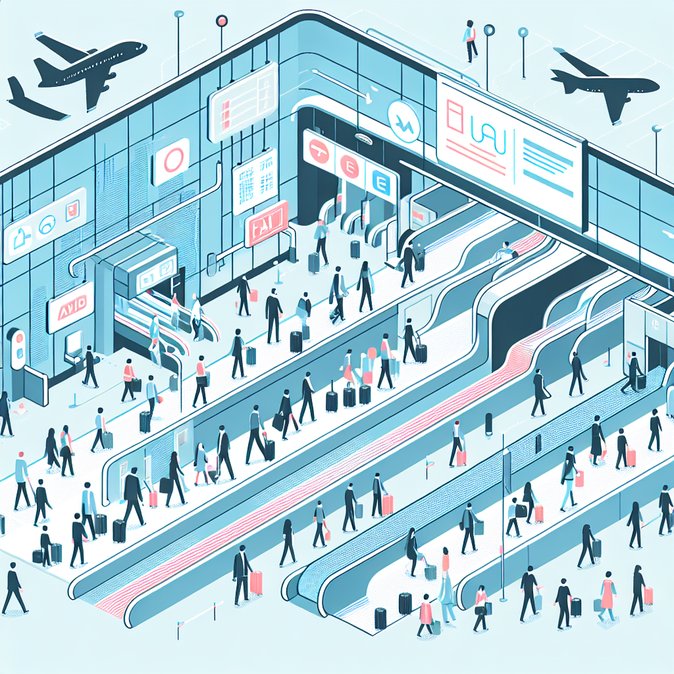
Hong Kong’s first long weekend of 2026 provided the clearest sign yet that cross-boundary mobility has normalised. According to Immigration Department figures, 3.2 million passenger movements were recorded between 1 and 3 January, equal to 85 % of the same festive period in 2019. Of those, 1.63 million were arrivals and 1.57 million departures. Land checkpoints again carried the bulk of the load: Lo Wu processed 620,000 crossings and Lok Ma Chau/Futian another 570,000, while the Hong Kong-Zhuhai-Macao Bridge control point handled 230,000.
Officials say a package of “holiday-surge” measures kept queues flowing. All land control points kept at least half of their automated e-Channel gates open around the clock, and 300 additional e-Channel lanes—first installed in late 2025—were activated. The Immigration Department also deployed roving “immigration marshals” armed with tablets that display real-time wait-time data, allowing them to redirect travellers on the spot. MTR Corporation, meanwhile, added six extra Intercity Through-Train departures, jointly funded under the Greater Bay Area Transport Facilitation Scheme.
![Holiday border rush pushes Hong Kong to 3.2 million crossings — 85 % of the pre-Covid peak]()
For corporate mobility managers, the numbers matter. Hong Kong‐based expatriates who commute to Shenzhen tech parks can now plan around predictable 25-minute average clearance times rather than the 90-minute snarls seen during the 2024 Easter rebound. Employers that budgeted for extra hotel nights in case staff were stuck at the border may be able to trim contingency costs.
The resurgence also vindicates Hong Kong’s strategy of tightening behind-the-scenes technology rather than adding manpower. A new AI-powered dashboard ingests CCTV feeds from every land checkpoint and flags congestion before it spills outside the halls, allowing supervisors to redeploy e-Channel capacity dynamically. Immigration consultants expect the system to roll out at Hong Kong International Airport by mid-2026, cutting arrival processing times for long-haul business flights.
Looking ahead, transport officials say they will review whether to restore overnight high-speed rail services to Guangzhou ahead of Lunar New Year. If the 3.2-million-passenger stress test becomes the new normal, multinational companies can expect far greater certainty when rostering regional staff or scheduling executive visits during peak holiday periods.
Officials say a package of “holiday-surge” measures kept queues flowing. All land control points kept at least half of their automated e-Channel gates open around the clock, and 300 additional e-Channel lanes—first installed in late 2025—were activated. The Immigration Department also deployed roving “immigration marshals” armed with tablets that display real-time wait-time data, allowing them to redirect travellers on the spot. MTR Corporation, meanwhile, added six extra Intercity Through-Train departures, jointly funded under the Greater Bay Area Transport Facilitation Scheme.

For corporate mobility managers, the numbers matter. Hong Kong‐based expatriates who commute to Shenzhen tech parks can now plan around predictable 25-minute average clearance times rather than the 90-minute snarls seen during the 2024 Easter rebound. Employers that budgeted for extra hotel nights in case staff were stuck at the border may be able to trim contingency costs.
The resurgence also vindicates Hong Kong’s strategy of tightening behind-the-scenes technology rather than adding manpower. A new AI-powered dashboard ingests CCTV feeds from every land checkpoint and flags congestion before it spills outside the halls, allowing supervisors to redeploy e-Channel capacity dynamically. Immigration consultants expect the system to roll out at Hong Kong International Airport by mid-2026, cutting arrival processing times for long-haul business flights.
Looking ahead, transport officials say they will review whether to restore overnight high-speed rail services to Guangzhou ahead of Lunar New Year. If the 3.2-million-passenger stress test becomes the new normal, multinational companies can expect far greater certainty when rostering regional staff or scheduling executive visits during peak holiday periods.
Source: VisaHQ Global Mobility News