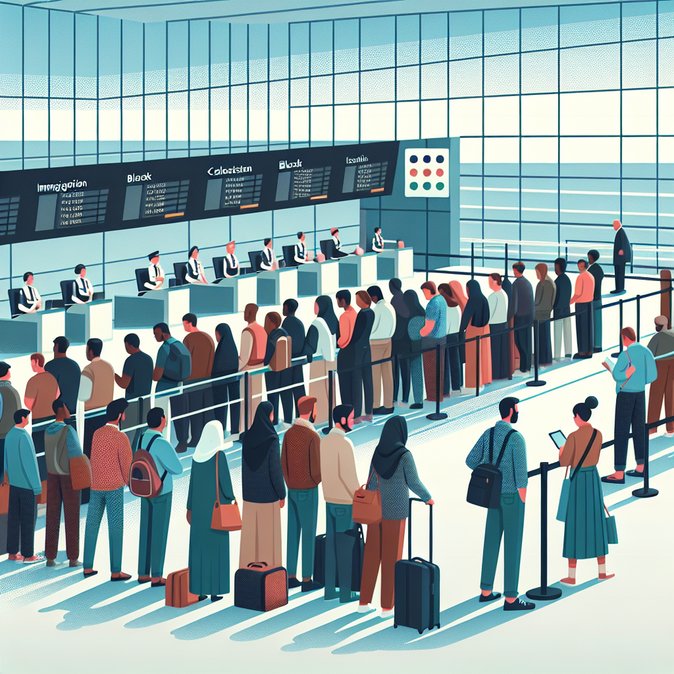
Passengers arriving at Heathrow’s Terminal 5 faced queues of up to three hours on the evening of 13 January, prompting the airport to issue an unusually blunt statement criticising the Border Force for “unacceptable” wait times. Social-media images showed densely packed lines with limited ventilation; witnesses reported several people fainting.
Heathrow said it had escalated the matter to the Home Office, arguing that officers’ rosters failed to account for a surge of families returning from school holidays. The Home Office acknowledged the issue and pledged to redeploy staff flexibly across terminals.
![Heathrow condemns ‘unacceptable’ Border Force staffing as immigration queues stretch for hours]()
The incident comes at a sensitive time: full enforcement of the UK’s Electronic Travel Authorisation (ETA) begins next month, and passenger volumes are forecast to rise ahead of Easter. Airport sources worry that chronic Border Force understaffing could undermine the government’s promise of a “world-class digital border”.
For mobility managers the episode is a reminder to warn assignees about potential arrival delays and to schedule connecting rail or domestic flights with generous buffers. Frequent-traveller forums report that holders of e-visas sometimes struggle to access e-gates when passport chips are damaged, forcing them into manual lines.
Trade unions said budget constraints and recruitment redirects toward inland enforcement have left front-line border posts short-staffed, a situation they predict will worsen when Caribbean and Gulf holiday traffic peaks in February.
Heathrow said it had escalated the matter to the Home Office, arguing that officers’ rosters failed to account for a surge of families returning from school holidays. The Home Office acknowledged the issue and pledged to redeploy staff flexibly across terminals.
The incident comes at a sensitive time: full enforcement of the UK’s Electronic Travel Authorisation (ETA) begins next month, and passenger volumes are forecast to rise ahead of Easter. Airport sources worry that chronic Border Force understaffing could undermine the government’s promise of a “world-class digital border”.
For mobility managers the episode is a reminder to warn assignees about potential arrival delays and to schedule connecting rail or domestic flights with generous buffers. Frequent-traveller forums report that holders of e-visas sometimes struggle to access e-gates when passport chips are damaged, forcing them into manual lines.
Trade unions said budget constraints and recruitment redirects toward inland enforcement have left front-line border posts short-staffed, a situation they predict will worsen when Caribbean and Gulf holiday traffic peaks in February.
Source: London Daily