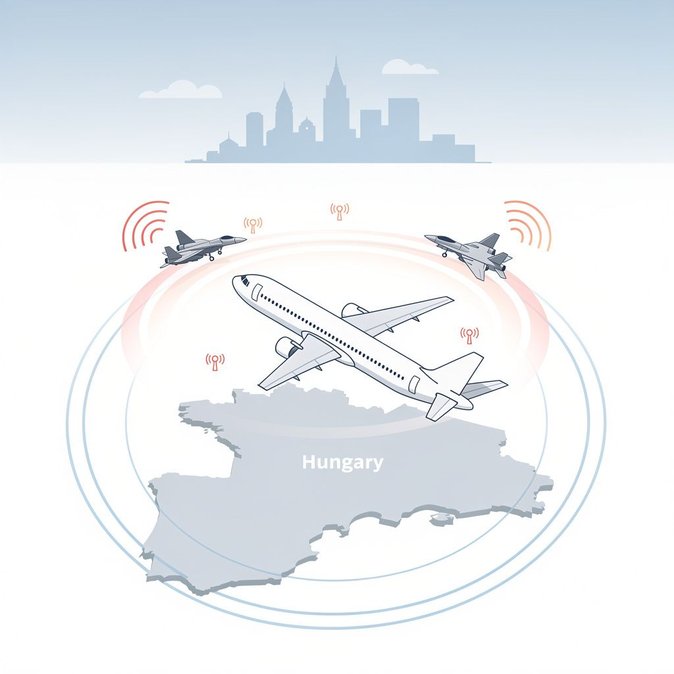
Late on 11 June, an Airbus A321 operating a charter flight from Tel Aviv to Prague triggered a security alert when it failed to establish radio contact with Hungarian air-traffic control while transiting Hungarian airspace. In line with NATO quick-reaction protocols, two Jas-39 Gripen fighters from Kecskemét Air Base were scrambled at 21:55 to intercept and visually identify the aircraft. According to Hungary’s defence ministry, communication was re-established within ten minutes and the civilian crew confirmed a radio-frequency mix-up. The Gripens escorted the Airbus to the edge of Slovak airspace before returning to base. The flight continued to Václav Havel Airport without further incident, landing shortly after 23:00. The Czech Air Force maintained heightened readiness but did not launch its own QRA jets. Prague Airport’s night-operations team put standing plans into place, positioning fire-and-rescue units and alerting the National Contact Point for Critical Infrastructure. Passengers disembarked normally, although some reported that border-police spot checks took longer than usual as officers verified manifests against EU watchlists. For corporate security managers the incident underlines the importance of real-time flight-tracking for duty-of-care. Airlines are already required to carry two independent VHF radios; the European Union Aviation Safety Agency (EASA) is expected to publish a safety bulletin reminding carriers to verify correct frequency selection during cockpit pre-flight checks.
Source: Blesk.cz / ČTK