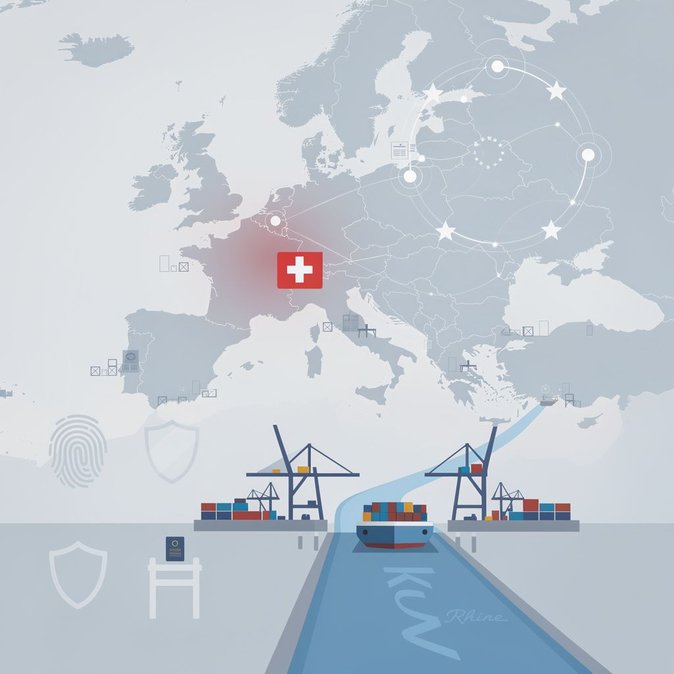
Federal Councillor Beat Jans used the informal EU Justice and Home Affairs Council in Dublin on 17 July 2026 to announce Switzerland’s accession to the European Ports Alliance – a public-private partnership that links customs, police and terminal operators to stem narcotics smuggling. The move follows green-light votes by the cantons of Basel-Stadt and Basel-Landschaft, home to the Swiss Rhine ports that handle two-thirds of the country’s seaborne trade. Membership gives Swiss authorities a seat at joint risk-analysis workshops, real-time intelligence exchanges and pilot projects testing AI-based container-scanning. For globally mobile companies that import or re-export via Basel, the initiative promises faster clearance for “trusted trader” consignments and earlier warnings when suspicious cargo is misusing their logistics chains. On the margins of the meeting, Interior Ministers debated the EU Commission’s draft Europol regulation that would – for the first time – grant Schengen-associated states like Switzerland a direct portal to Europol’s full criminal intelligence databases rather than the current case-by-case requests. In 2025, Switzerland recorded 39,098 ‘hits’ in the Schengen Information System; officials say direct Europol access could shave days off cross-border fraud or document-forgery investigations that underpin visa and residence-permit vetting. The Swiss delegation later travelled to London to confer with UK Home Secretary David Lammy and the National Crime Agency on corruption and cyber-crime. The visit underscores Bern’s strategy of embedding Swiss security services deeper into both EU and non-EU intelligence networks – a prerequisite for smooth border management once the Entry/Exit System (EES) goes live at the end of 2026. For corporate mobility managers the key takeaway is that tighter port security and richer data-sharing should reduce the risk of goods or personnel being wrongly flagged at Schengen borders, but it will also raise compliance expectations. Firms should review their due-diligence and supply-chain transparency processes before the new Europol arrangement enters force, likely in early 2027.