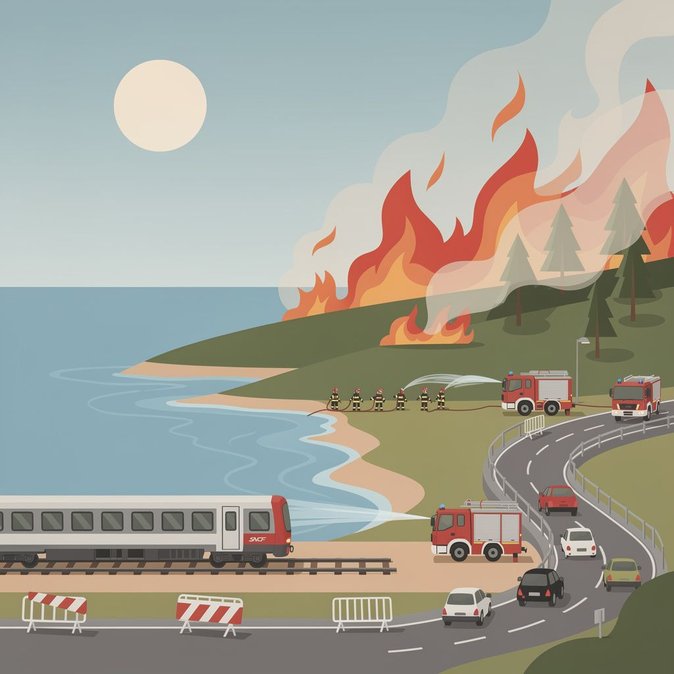
A fast-moving wildfire that ignited on 19 July near Draguignan (Var) expanded overnight, prompting the evacuation of 150 residents in Les Arcs-sur-Argens and forcing SNCF to suspend rail services between Toulon and Les Arcs early Monday. By midday 20 July, more than 600 firefighters, five Canadair water-bombers and four helicopters had contained 60 % of the 200-hectare blaze, but regional prefects kept roads closed and maintained an orange heat-wave alert. For mobility planners the timing is awkward: the Toulon–Nice corridor is a key leisure-to-business route linking Marseille’s tech cluster with Sophia-Antipolis and Monaco. Disrupted TER and TGV services could cascade into mid-week international connections at Nice-Côte d’Azur Airport, where passenger numbers are already 12 % above 2025 levels. Climate-driven wildfires have become a recurring operational risk. In 2025, French rail operator SNCF logged 87 fire-related line closures, double the pre-pandemic average. Companies with coastal construction projects or expatriate housing in the Var should review evacuation protocols and ensure assignees are enrolled in France’s FR-Alert cell-broadcast system, recently extended to foreign SIM cards. The Interior Ministry warned that extreme heat and mistral winds could fan new outbreaks across Provence. Business-travel insurers now routinely exclude ‘known-event’ wildfires from coverage 48 hours after official alerts, so HR teams arranging relocations should act quickly if re-routing is required.
Source: The Local France / AFP