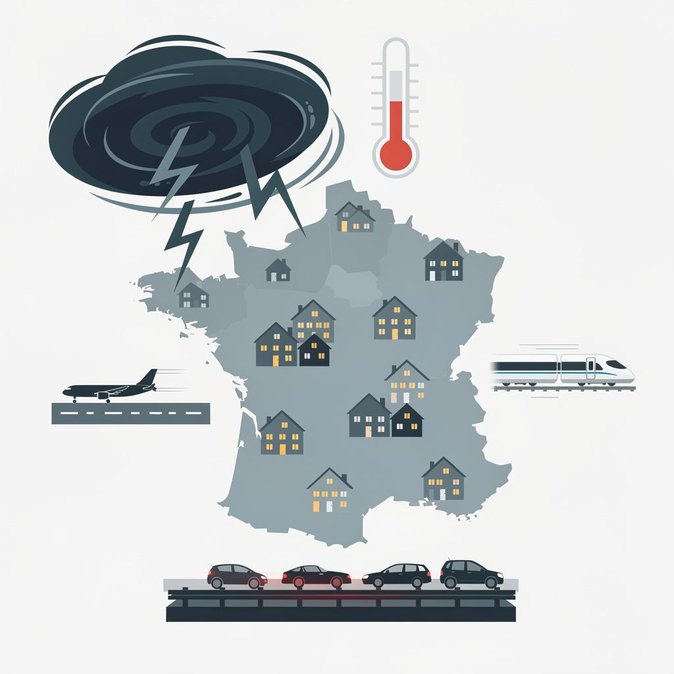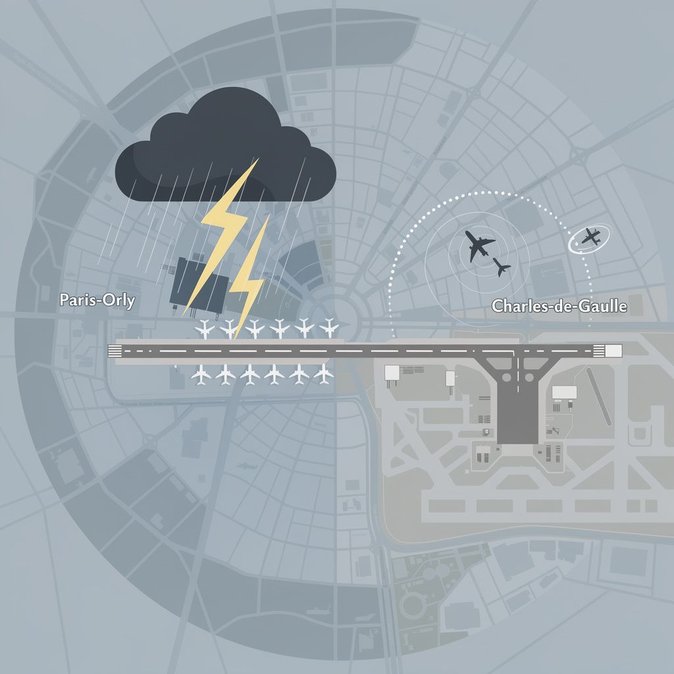
France’s civil aviation regulator (DGAC) has told airlines operating from Paris-Orly to cancel one in five flights scheduled after 18:00 on Thursday, 16 July, citing a high probability of violent thunderstorms sweeping across the Île-de-France region. The pre-emptive measure—standard practice under DGAC’s weather-related capacity-management protocol—is designed to reduce airborne holding and limit diversions that would otherwise place extra pressure on nearby Charles-de-Gaulle (CDG) and regional airports. DGAC warned carriers to expect knock-on delays at CDG, where arrival flows may need throttling if convective cells track further north. Orly, France’s second-busiest hub for business and leisure traffic, has little spare apron space during peak months. A controlled 20 % schedule reduction equates to roughly 70 departures and arrivals, affecting an estimated 10,000 passengers. Transavia France and easyJet, the two largest operators, have offered free rebooking or refunds. Corporate travel managers should advise employees with tight itineraries to reroute via CDG or delay travel until Friday morning when forecasts show the weather front moving east toward Germany. The alert follows a July heatwave that pushed ground temperatures above 38 °C, making the atmosphere primed for super-cell development. Meteorological agency Météo-France says wind shear and microbursts could exceed safe operating limits on final approach. Airlines therefore avoid last-minute go-arounds that burn fuel and disrupt crew-duty rosters. From a mobility-planning perspective, companies should monitor DGAC NOTAMs and ensure that travellers’ travel-risk insurance covers weather-related cancellations. Organisations with time-critical cargo—especially pharmaceuticals that transit Orly’s cold-chain facilities—should consider trucking to Liège or Brussels as contingency. Storm-driven capacity restrictions are likely to become more frequent: DGAC data show a 27 % rise in weather-related slot reductions since 2022, mirroring climate-change projections for more intense summer convective activity over Western Europe.
Source: Reuters (via MarketScreener)