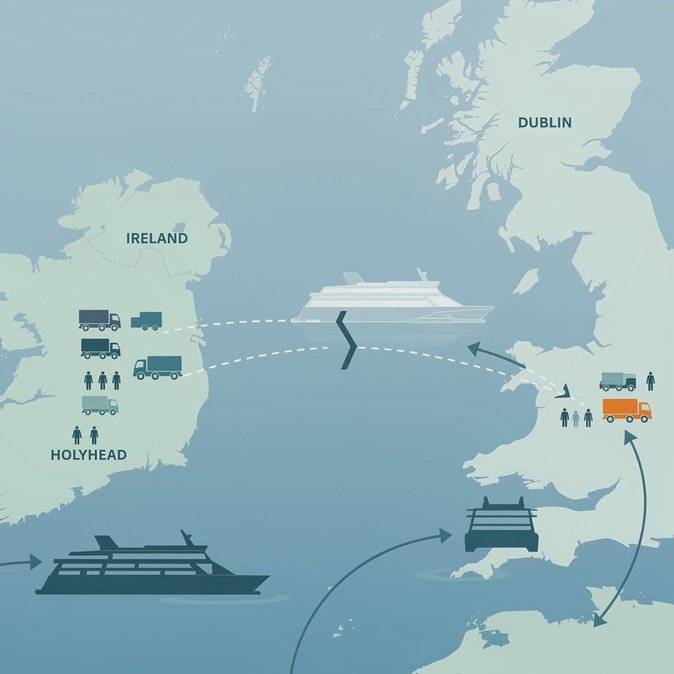
Irish Ferries issued a series of traffic notices on the morning of 23 July cancelling six high-speed ‘Dublin Swift’ sailings between Dublin Port and Holyhead and bringing forward departure times for several conventional Ulysses and James Joyce services. The carrier cited undefined “operational reasons”, industry shorthand that usually refers to technical issues or crewing constraints. The Dublin–Holyhead corridor is the principal sea link in the Ireland–U.K. land bridge used by just-in-time exporters shipping onward to continental Europe. With the peak holiday getaway beginning this weekend, the short-notice cancellations forced scores of freight operators to queue for space on the slower Ulysses vessel or divert to the longer Rosslare–Pembroke route. Passenger vehicles were rebooked automatically but many families reported having to adjust onward accommodation and rail connections in Britain. Logistics companies told Global Mobility News that the loss of the 11:10, 14:20 and 17:15 high-speed rotations alone removes more than 200 lorry slots on a day when capacity is traditionally tight. Higher-value chilled food loads were prioritised, leaving some electronics shippers facing overnight delays. Business travellers relying on the Swift’s two-hour crossing time were advised by Irish Ferries to arrive 30 minutes earlier for the substitute sailings, which take 3 hours 15 minutes. Port agencies warned that knock-on congestion could continue into Friday, with the 20:55 Ulysses run also rescheduled to 19:45. Employers moving staff under the Common Travel Area should remind travellers that ferry delays can cascade into missed train or flight connections in the U.K., potentially breaching working-time limits. Travel-risk teams are encouraged to track real-time updates via the carrier’s Sailing Updates page and to consider alternative ports such as Belfast–Cairnryan for urgent movements. The incident highlights the vulnerability of Ireland’s supply chain to single-route disruptions and the limited redundancy in the high-speed ferry sector after Stena Line mothballed its fast-craft in 2024. The Department of Transport last year proposed a contingency framework for strategic maritime links, but formal service-level obligations have yet to be enacted.
Source: Irish Ferries – Sailing Updates
How VisaHQ can help
VisaHQ simplifies the visa application process for individuals and businesses. Check current travel requirements, prepare the required documents and manage your application online through the VisaHQ Ireland portal.More From Ireland
View all
Fáilte Project extends ‘Day One’ support for asylum seekers at Dublin’s Balseskin Reception Centre

Irish employment-permit processing times updated: backlogs ease for Critical Skills visas