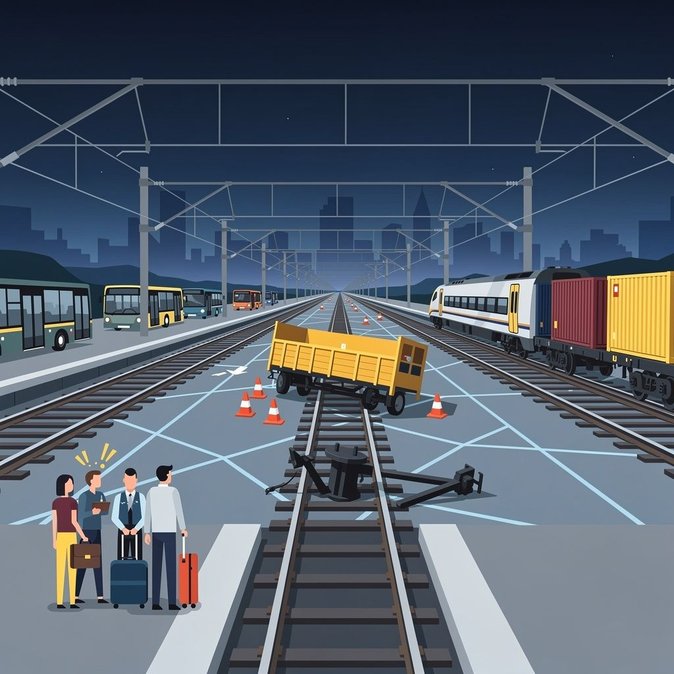
Just hours before Deutsche Bahn (DB) was due to reopen the strategically important Cologne–Aachen corridor after two weeks of track renewal, a construction train derailed between Horrem and Köln-Lövenich in the early hours of 24 July 2026. According to DB and the regional information portal Zuginfo.nrw, several newly-installed switches were damaged, forcing the operator to prolong the total line blockage until at least the end of July while spare parts are manufactured and installed. The closure paralyses one of Germany’s busiest cross-border arteries: long-distance ICE services to Brussels and Paris are being diverted via the high-speed line through Liège, adding up to 45 minutes, while regional express lines RE1 (Aachen–Hamm) and RE9 (Aachen–Siegen) terminate in Düren, where passengers must change to replacement buses or the reduced-capacity S 19 suburban line. Freight operators are rerouting westbound cargo through the Ruhr region, creating additional pressure on already congested alternative routes. For corporate commuters and air travellers the disruption is painful. Cologne/Bonn Airport warns of missed flight connections, and several multinational manufacturers in the Aachen technology cluster have triggered contingency shuttles to move staff between sites. Hotel bookings in Cologne have spiked as project teams elect to stay overnight rather than gamble on bus transfers during peak hours. DB says the derailment will not affect the broader Rhine-Rail corridor modernisation budget but concedes that unplanned overtime for track engineers could cost “low seven-figure” euro sums. The incident also highlights a rising risk for mobility planners: Germany’s decade-long rail-upgrade offensive combines tight construction windows with ageing rolling stock, leaving little buffer when things go wrong. Travel managers are therefore advised to monitor Zuginfo.nrw alerts, build longer connection times into itineraries, and consider shifting trips onto video until full service resumes.
Source: WDR