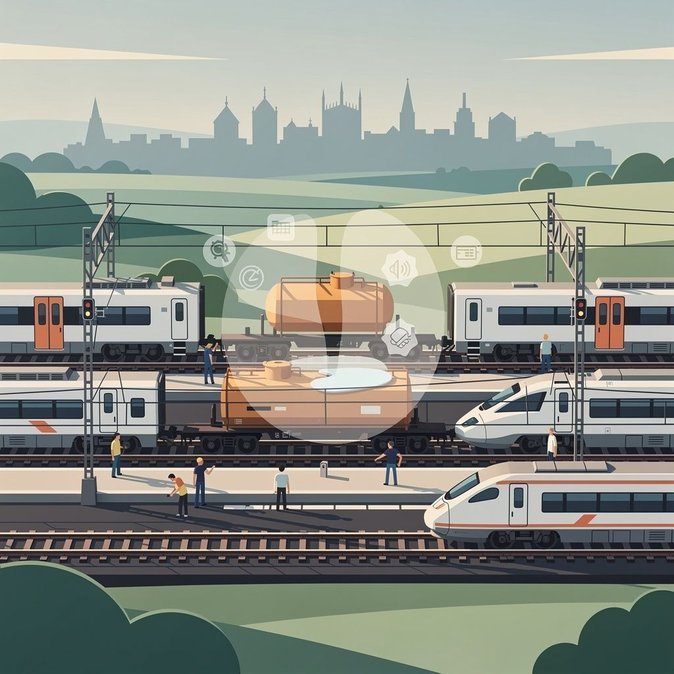
Rail traffic on the north-south axis between Kassel-Wilhelmshöhe and Frankfurt/Main came to a sudden stop at 11:00 a.m. on 25 July 2026 after firefighters were called to a leaking tank wagon in a siding near Gießen-Linden. According to Bundespolizei and Deutsche Bahn’s incident command, vapours escaping from an over-pressure valve on an empty petrol tanker triggered a level-three danger-goods protocol, requiring the shutdown of the adjacent main line. All ICE and IC trains on Germany’s high-frequency “Mitte” corridor were held at the next stations; regional services were either turned short or replaced by buses. The line was reopened at 13:30 p.m., but knock-on delays of up to 90 minutes persisted into the late afternoon as rolling stock and crews were out of position. Although no environmental damage was recorded, the event underscores the operational fragility of Germany’s freight-passenger mixed network: the siding in question connects a private fuel depot whose wagons cross the busy passenger tracks multiple times daily. Logistics providers moving time-critical goods between the Ruhr district and Bavaria reported missed slots, while several consulting firms cancelled same-day meetings in Frankfurt. For mobility coordinators the advice is to keep contingency taxi budgets ready and to remind travelling staff that even brief hazmat responses can cascade through the dense German timetable. Companies with rail-reliant supply chains may seek alternative routings via the Weser–Aller line or, where feasible, switch to overnight trucking to avoid daylight congestion.
Source: tagesschau