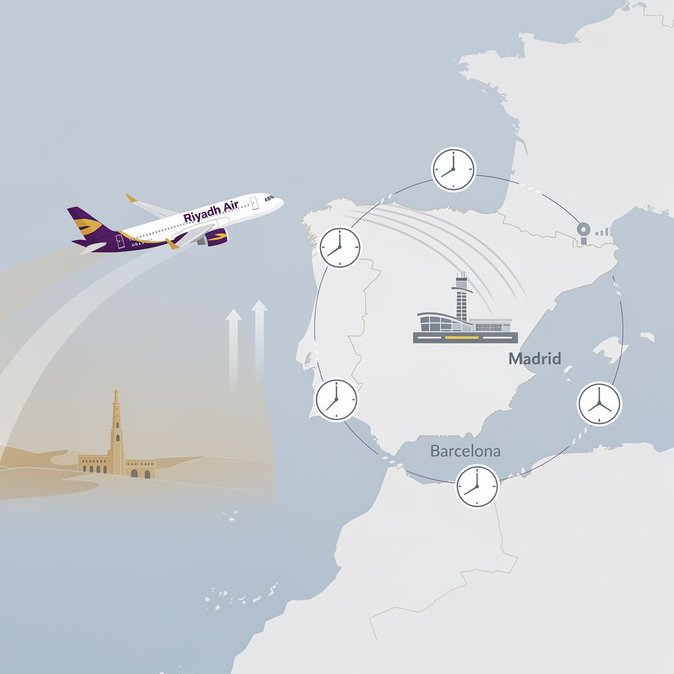
In an interview published 27 July, Riyadh Air CEO Tony Douglas confirmed that the Saudi start-up, which began twice-weekly Boeing 787 flights to Madrid last week, plans to add Barcelona “when slots become available”—a caveat that underscores growing congestion at Spain’s top hubs. Douglas told business daily Cinco Días that “the saturation of European airports, especially Madrid-Barajas and Barcelona-El Prat, is a real hurdle for airline growth.” His remarks come as Aena studies capping peak-hour capacity at both airports in summer 2027 pending major terminal expansions, a move that could force new entrants to accept off-peak slots. For corporate travel buyers the immediate benefit is additional seat supply on the Spain-Gulf axis, with connecting options via Riyadh to India and Southeast Asia. Riyadh Air has also signed an MoU with Air Europa to feed Latin-American traffic through Madrid, potentially creating new one-stop itineraries attractive to price-sensitive assignees. However, Douglas warned that future frequencies hinge on infrastructure: “If I already had 180 aircraft, the congestion would hurt,” he said, hinting that larger carriers may struggle more than nimble newcomers. Industry analysts note that slot scarcity could push up fares in peak seasons, offsetting some of the competitive pressure from Riyadh Air’s entry. Travel managers should monitor how Spain’s slot-allocation authority (AECFA) distributes additional capacity for the winter season. Companies with Middle-East business interests may wish to include Riyadh Air in approved-carrier lists but build contingency routings via Paris or Frankfurt until the Spanish hub projects materialise. From a mobility-tax perspective, Saudi Arabia’s visa-on-arrival scheme for Schengen residents applies only at Riyadh and Jeddah, so Spanish passport holders travelling via the new route can expect swift entry provided onward tickets are confirmed. Nonetheless, HR teams should refresh duty-of-care briefings given regional security tensions.
Source: Cinco Días