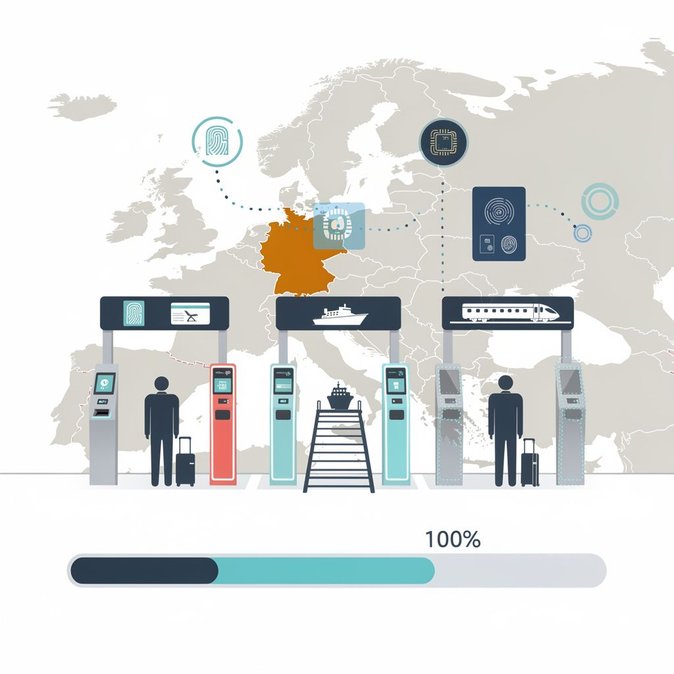
Belgium has quietly joined a group of nine EU and Schengen-associated states that admit they are still unable to operate the new Entry/Exit System (EES) around the clock at every border crossing. In an alert published on 17 September by global immigration firm Fragomen, the Belgian Interior Ministry acknowledged that technical and staffing constraints mean the biometric registration regime—launched EU-wide in April—remains offline at certain land and sea checkpoints during peak periods. Under the progressive-roll-out rules agreed in February, Member States were allowed limited derogations up to 6 September, but Belgium now concedes it will need “further time” to reach full compliance. Airlines at Brussels Airport report that the automated kiosks feeding the EES occasionally shut down to avoid congestion, with border police reverting to manual Schengen stamping. Similar work-arounds are in place at Zeebrugge’s ferry terminal and on Thalys/Eurostar services entering via Brussels-Midi. For third-country nationals—including UK, US and Canadian business travellers—the inconsistent application creates practical uncertainty. Travellers who are not recorded in EES during exit may trigger ‘over-stay’ alerts on their next trip if the system lacks matching entry data. Mobility advisers therefore recommend keeping boarding passes and hotel invoices to evidence actual travel history until Belgium confirms uninterrupted operation. Corporates should also prepare for the knock-on effect on ETIAS, the electronic travel authorisation now pencilled in for late 2027. EU officials have hinted that ETIAS will not go live until all Member States demonstrate stable EES performance—meaning Belgium’s delays could influence the bloc-wide timetable. In the meantime, employers sending frequent travellers through Belgian ports should monitor IT roll-out bulletins from the Immigration Office (IBZ) and factor in extra queues whenever the biometric kiosks are offline. While the partial suspension has not yet led to fines or refusals, the situation underscores how technology roll-outs can disrupt mobility long after formal launch dates.
Source: Fragomen Immigration Alert