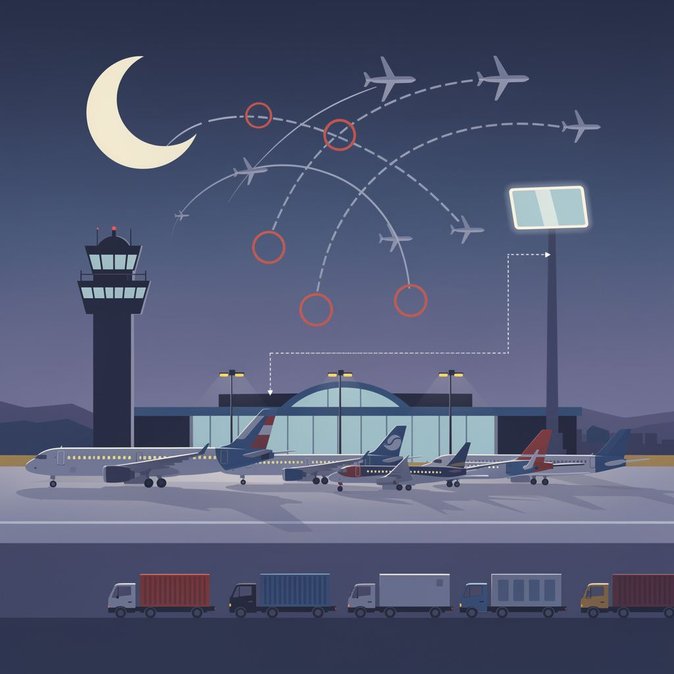
Business travellers heading to Brussels South Charleroi Airport (CRL) woke up on 16 September to discover that almost one-third of Ryanair’s daily schedule had been wiped from the departure boards. Air-traffic-controllers employed by the Belgian navigation service provider Skeyes began a series of nightly walk-outs at 22:00, demanding higher bonuses before the airport migrates to a new remote-tower centre in Namur next year. Although the stoppages were officially limited to the 22:00-08:00 shift, the knock-on effect was immediate: the first cancellation – a 16:10 service to Bucharest – was announced hours before the strike even started, because the return sector would have landed after curfew. By close of day on Wednesday, 14 outbound and 14 inbound Ryanair flights had been cancelled, affecting routes to key European business hubs such as Madrid, Manchester and Stockholm. Airport management warned that up to 800 flight movements could be disrupted if the strike, currently scheduled to run every night until 10 October, is not resolved. Other carriers could still be added to the cancellation list if their rotations cross the night curfew. The dispute centres on Skeyes’ plan to replace the traditional tower at Charleroi with a “digital tower” monitored remotely, a move the union fears will intensify workloads while eroding extra-pay premiums. Several rounds of conciliation have failed, and the latest mediation collapsed on Monday night. For corporate mobility managers, the immediate priority is contingency planning. Ryanair is offering free re-routing or refunds, but alternative seats from Brussels National (BRU) are already tight because of ongoing capacity constraints linked to EU Entry/Exit System (EES) testing. Travellers with early-morning departures from Charleroi should verify flight status the evening before and consider overnighting near Brussels National or Lille. Cargo shippers that use CRL’s belly-hold capacity for express consignments may also need to re-route via Liège or Luxembourg to avoid clearance delays. Looking ahead, the strike highlights a wider European trend: as airports roll out remote-tower technology to cut costs, unions are pressing for compensation or retraining. Employers with large assignee populations in Belgium should monitor the negotiations closely, as further industrial action could coincide with the autumn school holidays, traditionally a peak travel period for expatriate families.
Source: The Brussels Times