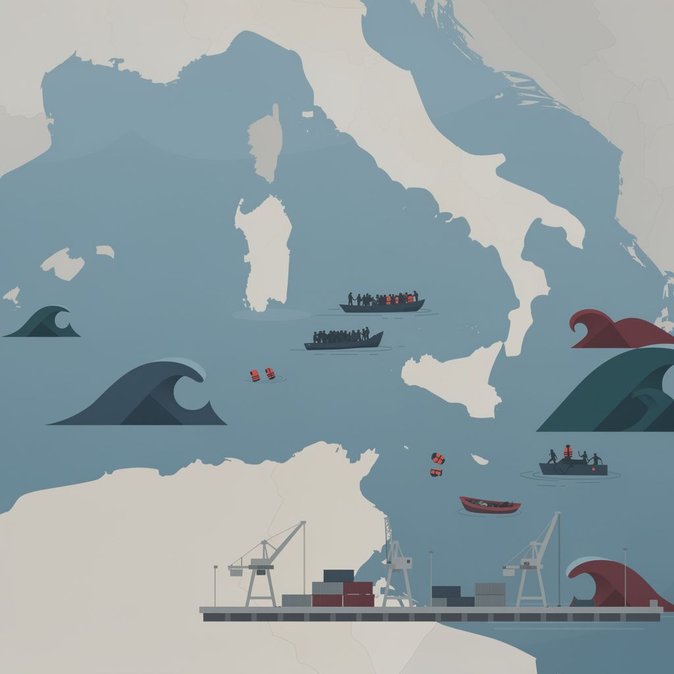
The U.N. International Organization for Migration (IOM) sounded the alarm on Thursday, 17 September, reporting that sea arrivals to Europe have fallen sharply so far in 2026—yet the Central-Mediterranean route to Italy remains the continent’s deadliest. According to the agency, only about 21,000 people have landed on Italian shores up to 15 September, down more than 50 percent from the same period in 2025. Paradoxically, fatalities are climbing. IOM’s Missing Migrants Project registers 996 confirmed deaths or disappearances on the route to Italy this year, compared with 844 at the same point last year. Search-and-rescue NGOs blame reduced state patrols, fewer NGO vessels, and increasingly hazardous tactics by smuggling networks that launch flimsier boats further from the Italian search-and-rescue zone. For Italian policymakers and corporate mobility managers alike, the numbers have concrete implications. Fewer arrivals ease immediate reception-centre pressures, but rising mortality intensifies political scrutiny of Italian maritime operations and could spur additional emergency decrees—affecting corporate relocation timelines for foreign assignees whose family members attempt irregular crossings. IOM Director-General Amy Pope urged EU states—including Italy—to expand safe and legal pathways such as humanitarian corridors and labour-mobility pilot schemes. Pope stressed that “nearly every death is preventable if rescue coordination and disembarkation responsibilities are shared more equitably.” Businesses that rely on seasonal and low-skilled non-EU labour may find new pilot quotas emerging in response to that call. In the near term, travel-risk teams should monitor possible increases in Coast Guard activity, port inspections and ad-hoc restrictions around Sicily and Calabria, which can delay commercial ferry services and private-vessel movements during mass-rescue operations.
Source: Associated Press