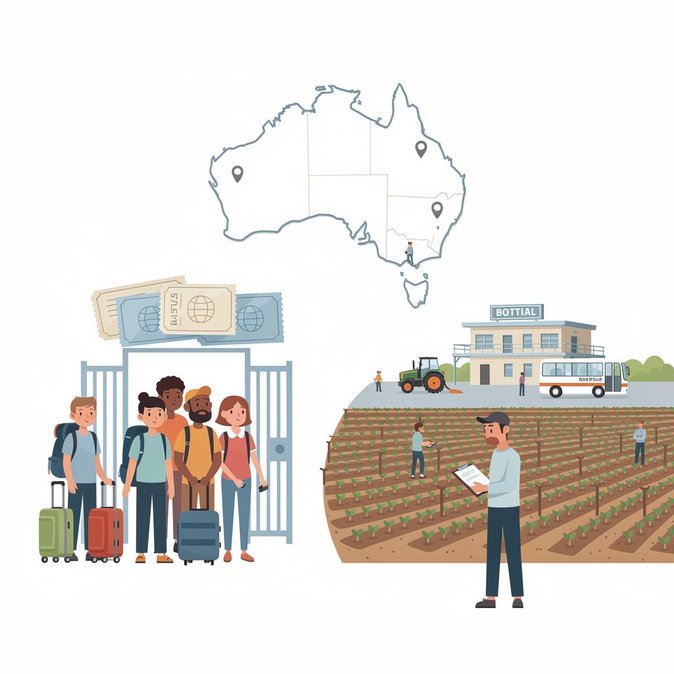
The Government’s plan to trim migration has zeroed in on Australia’s backpacker workforce. From July 2027, second- and third-year Working Holiday (Subclass 417/462) extensions will be subject to a capped ballot—45,000 places for a second year, down from 57,000 this year—and a hard limit of one further extension. Home Affairs says the measure will discourage ‘visa-hopping’ and help push net migration toward the 225,000 target. Industry reaction was swift. Farming lobby AgForce warns the change lands just as bumper grain and horticulture harvests require 16,000 additional pickers nationwide. The Backpacker & Youth Tourism Association predicts regional hostels will lose up to 25 percent of bed-nights, threatening small-town economies that rebuilt on the post-pandemic visitor surge. On ABC Radio on 18 September, shadow immigration spokesperson Dan Tehan labelled the ballot a “bureaucratic lottery” that will deter young travellers who can work unrestricted in Canada or New Zealand. Tourism operators fear the move undercuts a market segment that spends AUD 5.3 billion annually and supplies flexible labour to cafés, dive shops and surf schools. The Department argues that stronger priority processing for skilled agricultural visas will offset losses, yet employers say few tractor operators or fruit-pickers meet skilled-visa criteria. Until alternative labour pipelines—Pacific Australia Labour Mobility, digital nomad visas or domestic reskilling—scale up, mobility professionals should prepare for wage spikes and tighter regional-transfer options. Companies rotating staff into rural projects may also face accommodation shortages as backpacker numbers dwindle. Early booking and rotation of internal staff on short-term visas will be critical for 2027 harvest and peak tourism seasons.
Source: ABC News (Top Stories podcast)