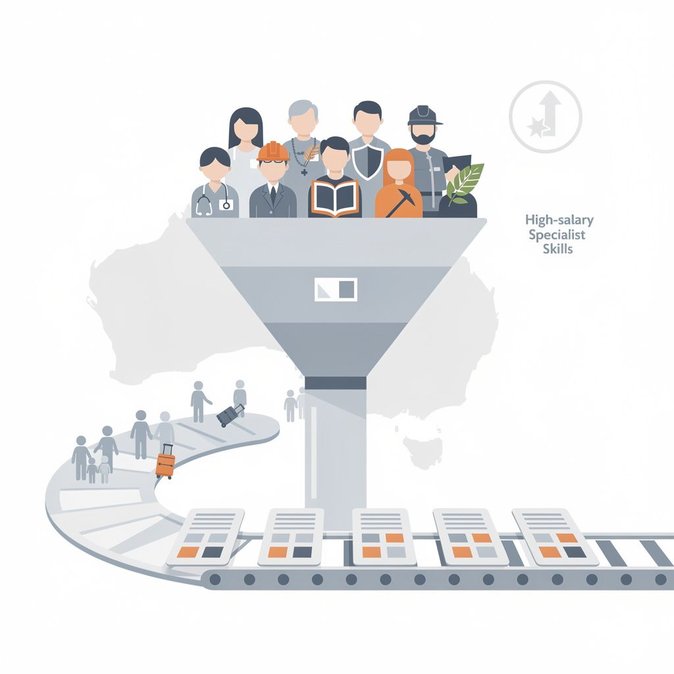
Effective 19 September 2026, the Department of Home Affairs is working to an entirely new playbook for deciding the order in which skilled-migration files are picked up. Ministerial Directions 121 (temporary Subclass 482 Skills in Demand) and 122 (permanent and regional skilled streams) replace Direction 119 and create five priority tiers that will be applied to both new and unfinalised applications. Top priority now goes to ‘priority-sector’ occupations that directly support defence—including AUKUS roles—law enforcement, healthcare, teaching, construction, resources and the newly added agriculture, aquaculture and fishing sectors. A dedicated second tier fast-tracks Specialist Skills Stream requests where salaries exceed AUD 146,576. Offshore applicants who include dependants drop further down the queue, a nudge for employers to reassess family-accompanied assignments. Fragomen notes that although eligibility criteria and occupation lists remain unchanged, employers should brace for short-term turbulence as case-officers re-allocate thousands of pending files. Over time, companies hiring engineers, nurses or agritech talent can expect materially shorter wait-times, while ICT and generic managerial roles may slide to the back. Strategically, the reset aligns processing resources with the Government’s wider goal of reducing net migration without starving high-priority sectors of labour. It also dovetails with the forthcoming Subclass 482 ‘Skills in Demand’ visa reforms due later this year, signalling a more granular, sector-based approach to employer sponsorship. Action items: review current recruitment pipelines, confirm whether candidate roles fall under the expanded priority list, and re-forecast assignment start-dates. Organisations sponsoring offshore staff should weigh the cost-benefit of deferring family travel until after grant to maintain higher priority.
Source: Fragomen Immigration Alert