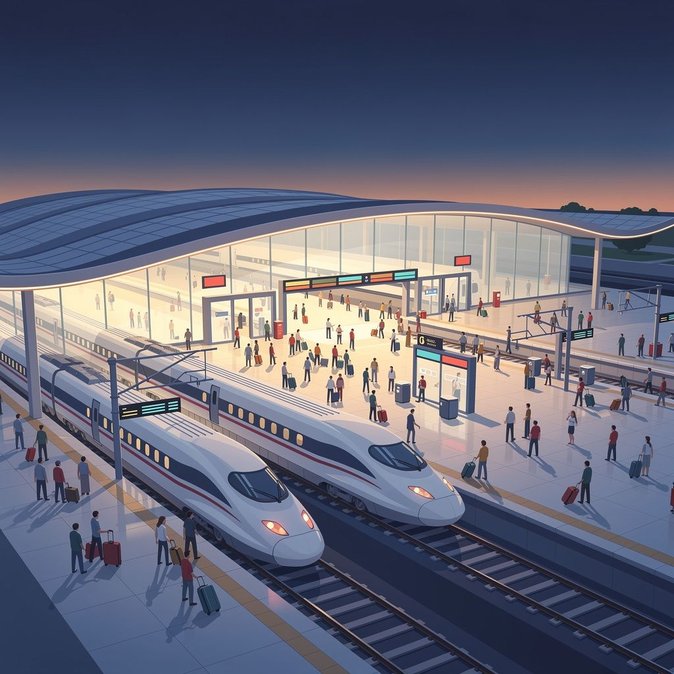
China Railway Beijing Group announced that Beijing South Railway Station moved an estimated 272,000 passengers on September 25, the first day of the three-day Mid-Autumn break. That represents a 6.4 per cent year-on-year increase and sets a single-day record for the 15-year-old hub. Demand is fuelled by a ‘super-golden-week’ effect: many travellers are Combining the Mid-Autumn festival with the week-long National Day holiday to create up to 16 consecutive days off. The busiest corporate-travel corridors are Beijing–Shanghai and Beijing–Hangzhou, both key routes for technology and financial-services staff commuting between headquarters and regional branches. To accommodate the surge, the station added late-night high-speed services and doubled up (re-marshalled) multiple-unit sets on nearly 30 routes. It also opened four temporary “quick entry” halls dedicated to passengers with e-tickets and minimal baggage, cutting average security-screening time to eight minutes during the morning peak, according to station management. Rail operators are leaning on AI-driven demand-forecasting tools to decide—sometimes with just six hours’ notice—which trains to lengthen. Mobility managers should therefore monitor last-minute timetable adjustments that can affect crew rotations and end-to-end travel times for assignees. The record numbers also test the recently expanded 5G coverage and digital-ID boarding pilot at Beijing South. Early feedback from travellers indicates that facial-recognition gates processed up to 1,200 passengers per hour, roughly double the manual-gate throughput, hinting at a scalable model for other mega-stations ahead of next summer’s peak.
Source: Beijing News (新京报)