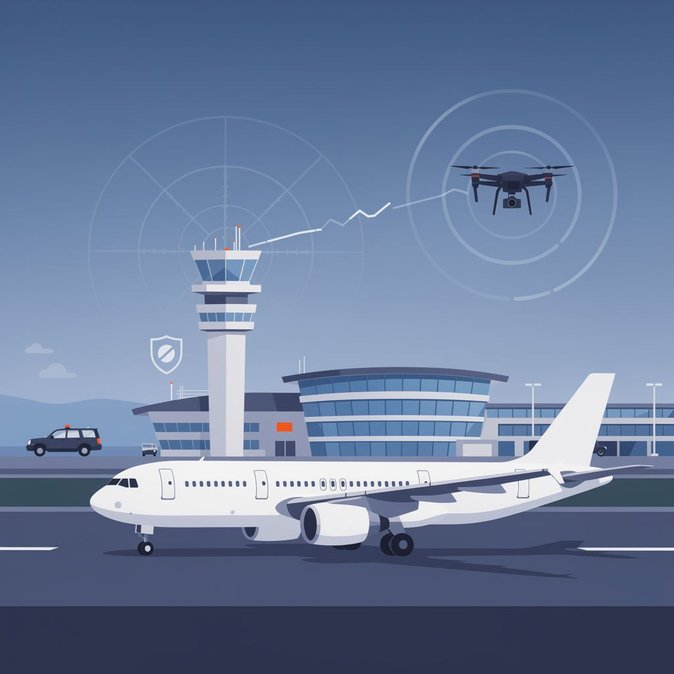
Czech aviation regulators have closed an investigation into a near-miss incident involving an unmanned aerial vehicle that was sighted at 1.3 km altitude over Prague’s Štěrboholy district this August, according to a report published by news outlet *iROZHLAS* on 5 October 2026. Pilots of a Scandinavian Airlines CRJ-900 on approach to Václav Havel Airport reported the drone, triggering immediate air-traffic alerts, but police were unable to identify the operator and have now shelved the case. The Civil Aviation Authority (ÚCL) confirmed the drone flight was neither logged in the national DroneMap registry nor permitted to exceed the 120-metre ceiling for that airspace. ÚCL data show a steep rise in drone-related incidents—from 172 in 2023 to 572 in 2025, with 402 already recorded by 6 August 2026—raising concerns ahead of the busy winter-holiday travel period. While the August event caused no flight diversions, Prague Airport is reviewing its counter-UAV protocols. Existing measures include geofencing alerts and rapid-response ground units, but officials say additional radio-frequency detection sensors may be installed. Airlines operating into Prague are advising crews to reinforce sterile-cockpit procedures during the final descent and to report any UAV sightings immediately. For corporate mobility managers, the episode underscores the importance of factoring drone disruption into duty-of-care frameworks—particularly for time-critical technical teams and VIP movements. Companies chartering drones for aerial surveys inside Czech airspace should audit pilot licensing and ensure flight plans are submitted through the mandatory U-Space interface that enters force EU-wide in January 2027. Regulators are also considering higher fines and potential criminal liability for unauthorised flights above 300 metres. A public-awareness campaign is expected later this month to educate hobbyists and commercial operators alike.
Source: iROZHLAS