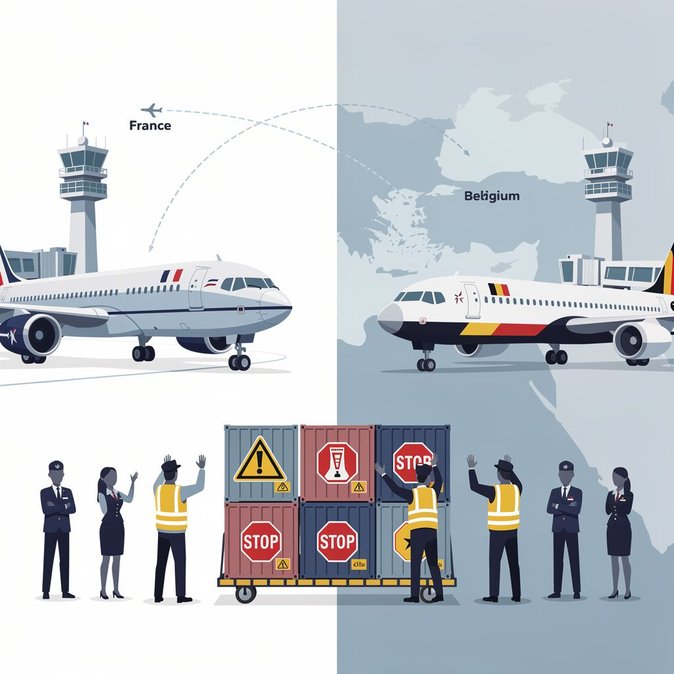
Less than 24 hours after the latest cargo blockade at CDG, aviation news site *Air Journal* revealed that French unions had already warned Air France about a contested export on flight AF 966 to Tel Aviv. According to union communiqués, that consignment was withdrawn and is now booked on El Al service LY 220 set to depart on 10 October. Similar activism is spreading northward: at Brussels-Zaventem, Brussels Airlines crews are refusing Tel Aviv rotations unless the company restores a voluntary roster system and raises war-risk bonuses. Brussels Airlines management insists no employee is forced to fly to Israel and points to a €500 000 war-risk insurance policy. Cabin-crew unions retort that placing a monetary value on human life is "tone-deaf" given the security situation. The standoff may cause short-notice cancellations on the lucrative Benelux–Israel corporate route. For firms that rely on the CDG‐TEL Aviv corridor for pharma samples, perishables or executive travel, the twin disputes signal volatility beyond France’s borders. Contingency routing via Milan or Istanbul—cities with robust Tel Aviv frequencies—should be priced and pre-approved by travel managers. In France, the episode could accelerate DGAC’s planned guidelines on "ethical objections" in ground-handling contracts, a move already backed by several MPs. Corporations moving military or surveillance-grade technology through France should anticipate stricter declarations and potentially longer export-licence processing times. If the row escalates, Eurocontrol slot allocation may be affected as airlines swap aircraft types or change departure waves to reduce exposure to protest action; travel teams should keep PNRs active for rapid re-ticketing.
Source: Air Journal