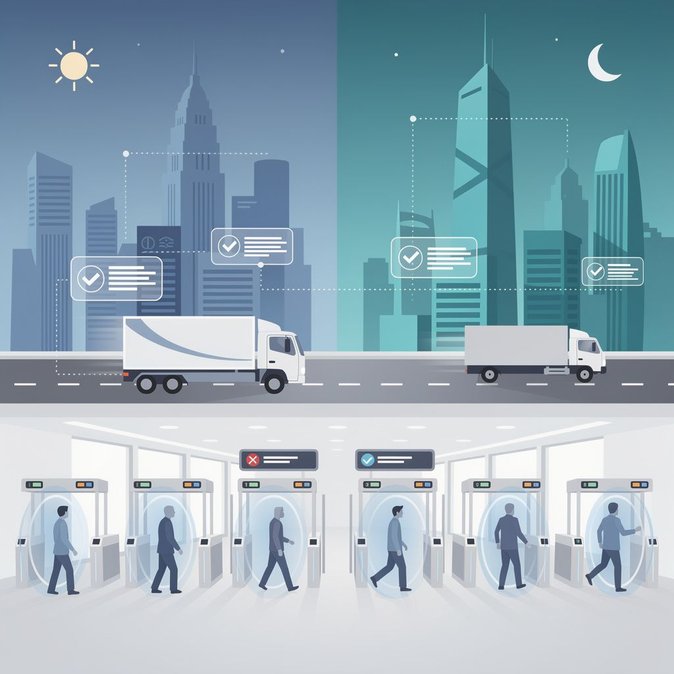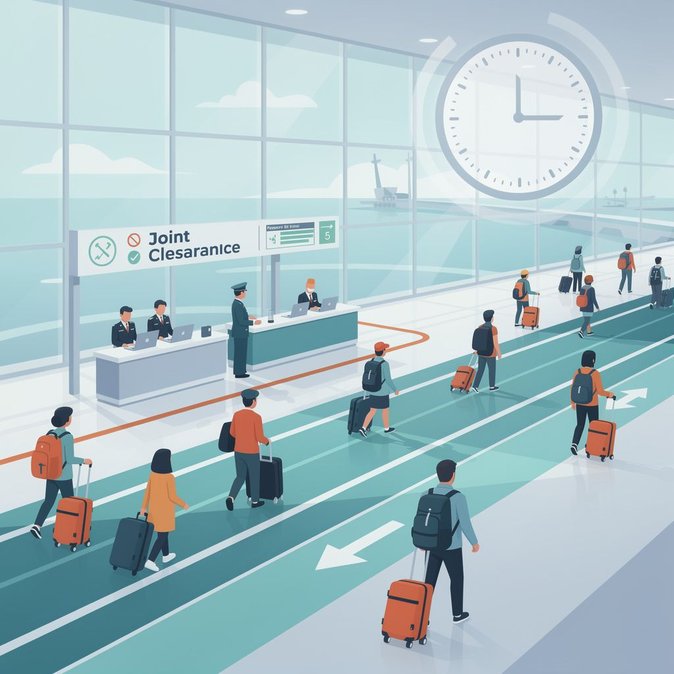
By 11 a.m. on opening day more than 5 000 travellers had already used the joint-clearance channels at Huanggang Port, according to Shenzhen Customs and Hong Kong Immigration Department figures. Commuters interviewed by China Daily and local broadcasters reported total door-to-door times between Central and Futian of under one hour—including transport—compared with up to two hours previously. Bus operator Kwoon Chung said shuttle frequency could be cut from 10 to 6 minutes because coaches are spending less time idling at checkpoints. The smooth launch is a critical proof-of-concept for Chinese authorities, who intend to replicate the model at Man Kam To and Lo Wu. Officials credited months of simulations using “digital-twin” software to stress-test biometric gate throughput and algorithmic risk-scoring. No abnormal queues were recorded even during a 30-minute surge when two tour-groups—total 800 passengers—arrived simultaneously. Retailers in Shenzhen’s Futian district and Hong Kong’s Sheung Shui neighbourhood reported a 15–20 % uptick in midday footfall versus last Monday, underscoring the immediate economic impact. Chain cafés inside the port’s public area processed over 3 000 mobile-payment transactions, signalling restored confidence among day-trippers whose numbers had lagged pre-pandemic levels. Travel-management companies advise corporate clients to update staff mobility policies: holders of Mainland Travel Permits or Exit-Entry Permits can now register for the automated lanes in advance and should allow only 15 minutes for clearance when planning itineraries.
Source: China Daily Asia