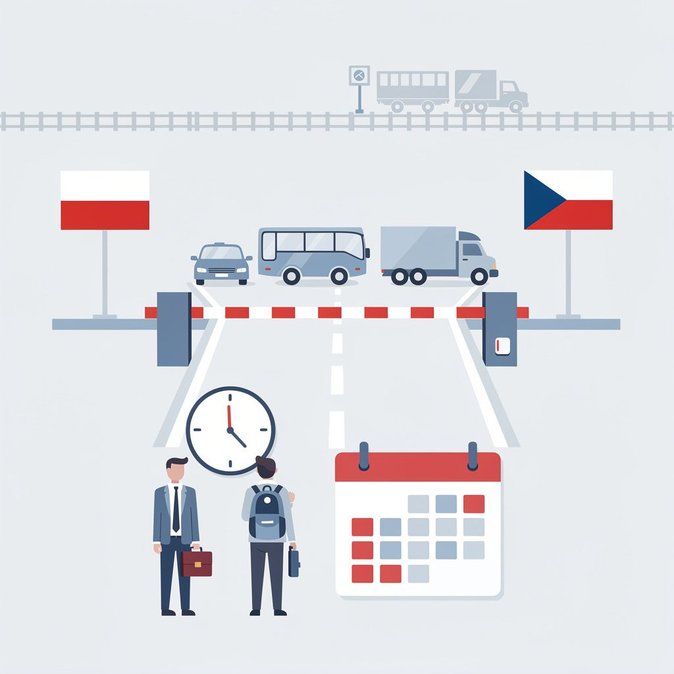
Business travelers driving or taking the train between Austria and the Czech Republic will continue to encounter systematic border checks for at least another five months. The European Commission’s updated Schengen notification table published on 12 October 2026 confirms that Vienna has prolonged its temporary re-introduction of internal border controls until 15 March 2027. Austria first re-established controls on its land frontiers with the Czech Republic, Slovakia, Hungary and Slovenia in 2024, citing a spike in irregular migration and mounting pressure on reception facilities. Each six-month renewal requires a fresh risk assessment under Articles 25–27 of the Schengen Borders Code; the latest filing again points to people-smuggling networks along the Western Balkans route and knock-on effects of Russia’s war in Ukraine. For companies that routinely send staff from Prague to Vienna or to Austrian production plants in Upper Austria, the decision means continued queuing at road crossings such as Wullowitz/Dolní Dvořiště and Drasenhofen/Mikulov, as well as spot checks on cross-border rail services operated by ČD and ÖBB. While passports are not stamped, travelers must carry a valid travel document and be prepared for ID verification, vehicle searches and questions about travel purpose. Long-distance bus operators report average delays of 10–25 minutes per coach; freight forwarders have advised clients to budget an extra half-hour for customs-like stops. Human-resources managers should update assignee travel briefings and factor the controls into duty-of-care planning. The Czech Confederation of Industry has urged both governments to deploy more staff and digital pre-clearance lanes to keep traffic moving, warning that persistent hold-ups could undermine just-in-time supply chains in the automotive sector. Companies may wish to consider alternative routings through Bavaria, but Germany has its own controls in place (see separate story).