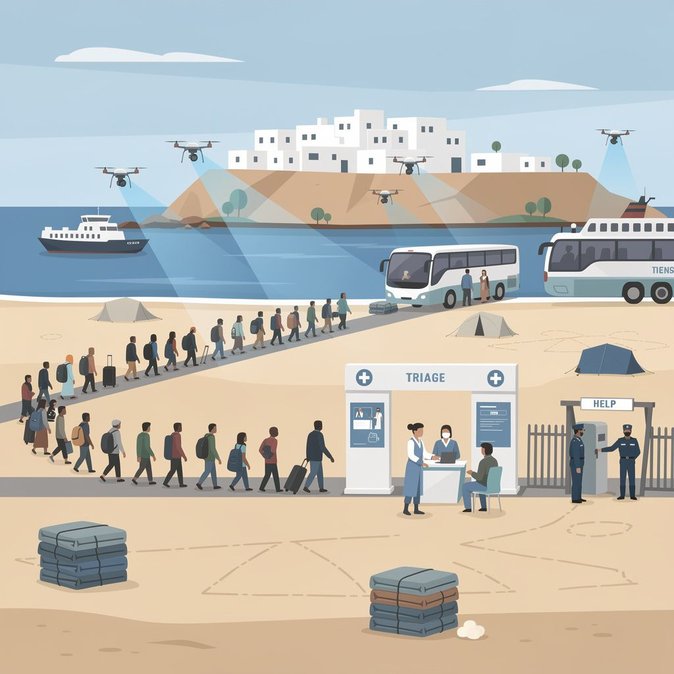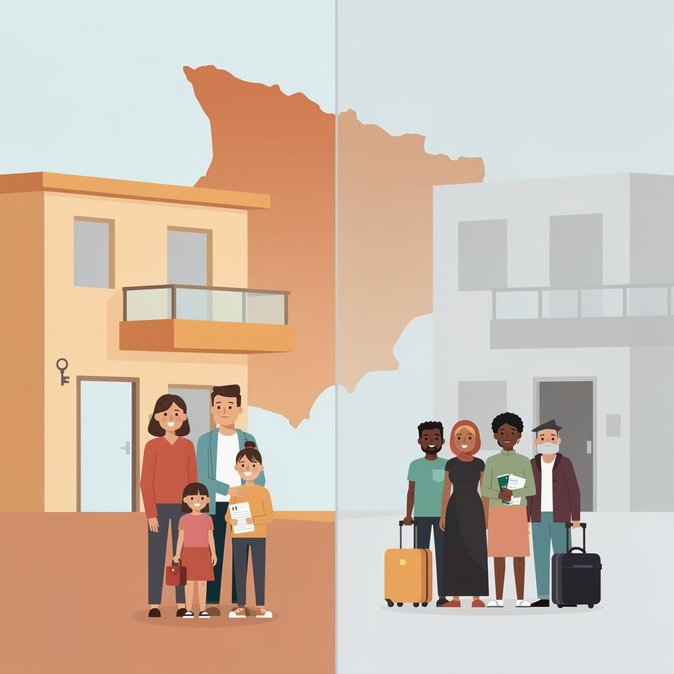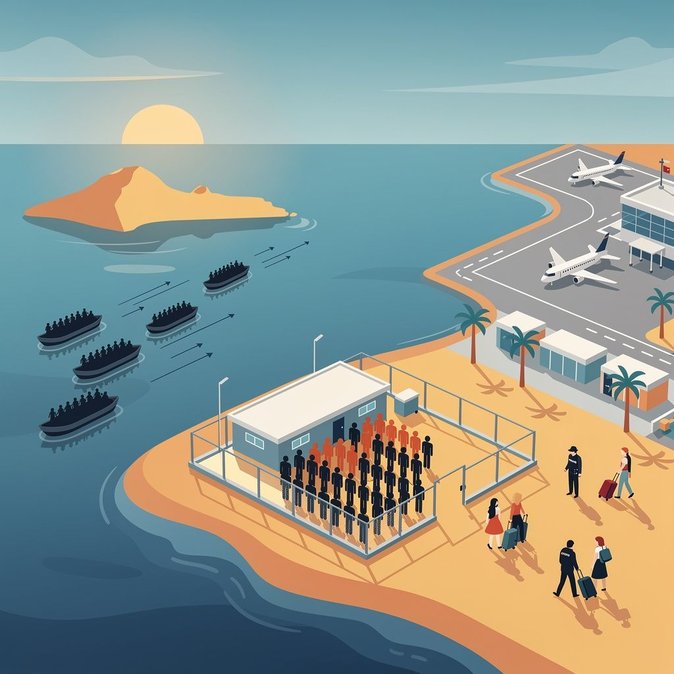
The government of the Canary Islands has again urged Madrid and Brussels to activate an emergency relocation mechanism after 1,126 people arrived in cayucos between 9 and 13 October, straining reception centres on El Hierro and Gran Canaria. Speaking to Cadena SER on 13 October, regional spokesperson Alfonso Cabello said “we are facing a new and very complicated situation” and criticised what he called the central government’s “absence of reaction.” Although overall arrivals to the Canary Route are 55 % below 2024 levels thanks to enhanced patrol cooperation with Senegal, autumn weather windows are allowing larger boats to attempt the 1,000-km voyage. Salvamento Marítimo officials say some vessels now carry over 350 people, complicating rescue operations and stretching medical triage resources upon landing. The islands’ main reception hub in Las Raíces (Tenerife) is already at 94 % capacity, forcing authorities to reopen the disused Campamento de Las Canteras. Business groups worry that the renewed pressure could divert security personnel from Tenerife South airport ahead of the winter charter boom, potentially re-introducing the queue chaos seen in 2021. Cabello called on the European Commission to fast-track the Crisis and Force Majeure chapter of the new Pact on Migration and Asylum so that migrants arriving on outermost regions can be transferred to willing mainland states within 48 hours. The Commission, however, says the mechanism will not be operational until mid-2027 pending IT upgrades to Eurodac. International companies operating in the Canaries’ special economic zone (ZEC) should anticipate localised protests and possible blockades of the TF-5 highway if camp capacity is exceeded, and may wish to review duty-of-care protocols for assignees on the islands.