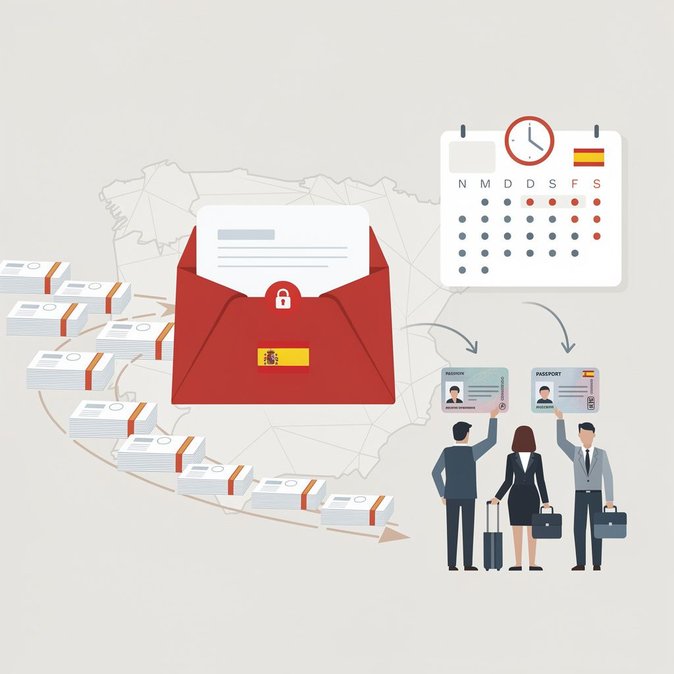
Spain’s Ministry of Foreign Affairs has informed embassies and consulates that from 26 October to 4 December it will suspend large-volume diplomatic‐pouch shipments so that carriers can focus on transporting millions of overseas ballots ahead of the 29 November general election. The internal circular, revealed by newspaper The Objective on 20 October, means no bulk mail or official documents—passports, civil-registry files, or visa vignettes—can be dispatched to or from missions during the six-week window. Diplomatic pouches are the main channel for transmitting printed visas, residence-authorisation stickers and legalised documents that cannot be issued electronically. Consular officials told the paper that even routine passport renewals may now be pushed into mid-December, and that apostilled documents required for work-permit filings could miss corporate start dates. Several embassies have urged expatriates to switch to digital certificates where available, but warned that not all host countries accept electronic copies. The freeze comes as Foreign Minister José Manuel Albares defends the government’s capacity to manage an estimated two million external votes—quadruple the turnout recorded in July 2023. Critics argue the decision will “paralyse” consular services at a peak travel-planning period that includes U.S. Thanksgiving and early-Christmas mobility. For global companies, the practical impact could include delayed onboarding of assignees who need Spanish visas affixed to their passports, slower legalisation of employment contracts and potential knock-on effects for family-reunification cases. Mobility managers should advise travellers to use courier services for time-sensitive originals where legally permissible and, if necessary, postpone assignment start dates or leverage remote-work arrangements until physical documents arrive. The ministry insists emergency shipments—medical supplies, humanitarian documentation and urgent laissez-passer papers—will be exempt, but it has not clarified criteria for what qualifies as ‘urgent’. Firms are therefore encouraged to liaise proactively with relevant consulates to obtain written confirmation of processing timelines.
Source: The Objective