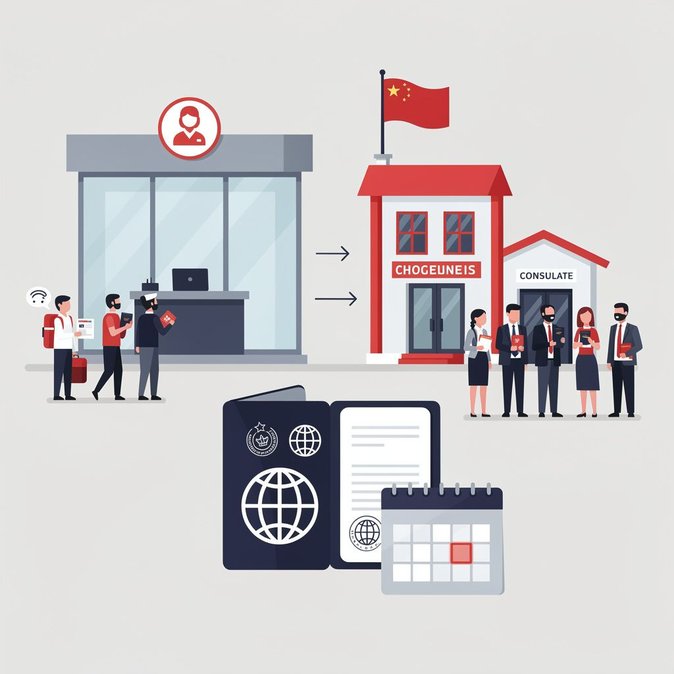
A legal analysis published on 21 October 2026 highlights the business-risk implications of China’s new **Exit and Entry Administration Regulations** that took effect on 15 September 2026 under State Council Decree No. 841. The article warns that foreign nationals who submit **false documents or statements**—whether at an overseas consulate, a border checkpoint or a local immigration bureau—can now be barred from entering China for **one to five years**. Repeat offenders and organisations that “organise or facilitate” fraudulent applications face heavier fines and possible criminal charges. Key changes include: (1) mandatory in-person interviews for certain work-permit and talent-visa categories; (2) expanded investigative powers allowing immigration officers to visit employer premises without prior notice; and (3) the creation of a public **“credibility blacklist”** covering companies and agencies that have provided forged contracts, invitation letters or tax records in support of visas. Once blacklisted, an employer’s future invitations may receive heightened scrutiny or automatic rejection. For HR and global-mobility managers, the new rules demand **rigorous document vetting**. Internal audits should verify that offer letters match SAFEA-approved positions and that salary figures reported in work-permit systems align with payroll tax filings. Vendors who promise “guaranteed” work visas or who advise clients to withhold negative travel history now carry heightened liability. Legal counsel recommend incorporating immigration-compliance clauses and indemnities into third-party service contracts. Business travellers should expect longer processing times at consulates as visa officers exercise discretionary interviews. Companies may need to provide supplementary letters detailing project scope, travel history and financial accountability. Travellers with previous overstays, incorrect registrations or criminal records abroad should consult counsel before re-applying, as immigration databases are now integrated with INTERPOL and multiple domestic ministries. Although the regulations tighten controls, they also codify facilitation measures for frequent business visitors: foreigners who have made “positive contributions to international trade and technological cooperation” may receive multi-year, multiple-entry *M* visas. Enterprises with clean compliance records can apply for **priority processing** at designated pilot ports, a benefit particularly valuable for supply-chain managers shuttling between mainland plants and ASEAN hubs.