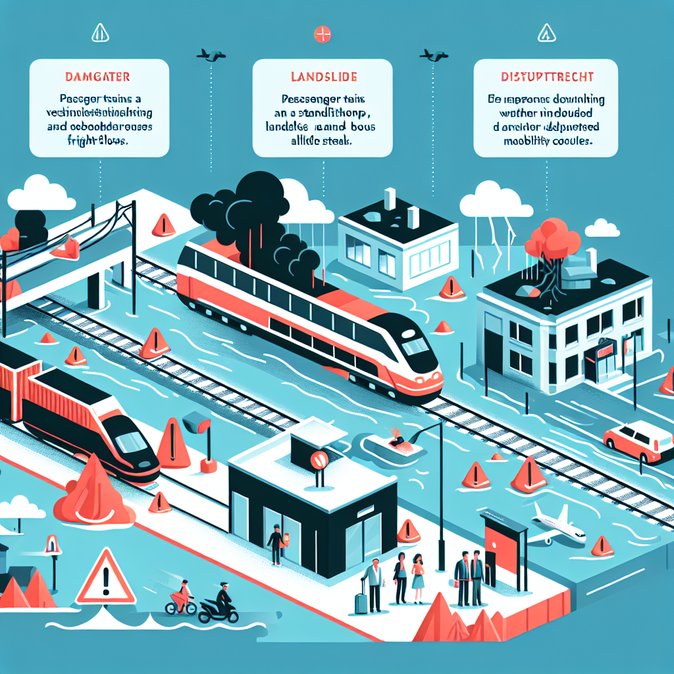
Spain’s national rail operator Renfe extended sweeping service suspensions on Saturday as floodwaters and landslides continued to undermine track beds across the south and north-west. In Andalucía only the Málaga Cercanías C1 commuter line and an abbreviated Madrid–Villanueva de Córdoba AVE were running; high-speed services normally linking Madrid with Córdoba, Sevilla, Málaga and Cádiz terminated 120 kilometres short of their destinations, with passengers bused the final leg.
Further north, all long-distance trains to and from Vigo remained cancelled for a third straight day. The coastal city – a hub for the Galician automotive and ship-repair sectors – has been effectively cut off from the national rail grid since Thursday, prompting logistics providers to shift export cargoes onto road and coastal feeder services out of A Coruña.
![Renfe Halts Most Andalusia Trains and Cuts Galician Services for Third Day Amid Flooding]()
Track owner Adif insists its infrastructure is technically passable, but Renfe cites dynamic speed restrictions and the risk of fresh wash-outs as grounds for the shutdown. The spat has left travellers confused: ticket sales remain blocked until at least Monday and no substitute trains have been promised. Renfe’s commercial department has activated its force-majeure protocol, allowing fee-free changes or refunds, yet business associations complain that the lack of alternative capacity is hitting just-in-time supply chains.
Mobility managers with expatriate staff in Sevilla and Vigo are advised to reroute journeys through Madrid Barajas or Porto and to budget extra time for last-mile road transfers. Companies operating collective-bargaining commuter shuttles should confirm road conditions twice daily and consider staggered shift start-times to absorb highway bottlenecks.
With fresh yellow rain warnings posted for Extremadura and central Castilla-La Mancha, transport analysts fear Renfe may widen the blackout before services can safely resume, underscoring the vulnerability of Spain’s high-speed-rail-centric corporate travel model to extreme weather events.
Further north, all long-distance trains to and from Vigo remained cancelled for a third straight day. The coastal city – a hub for the Galician automotive and ship-repair sectors – has been effectively cut off from the national rail grid since Thursday, prompting logistics providers to shift export cargoes onto road and coastal feeder services out of A Coruña.

Track owner Adif insists its infrastructure is technically passable, but Renfe cites dynamic speed restrictions and the risk of fresh wash-outs as grounds for the shutdown. The spat has left travellers confused: ticket sales remain blocked until at least Monday and no substitute trains have been promised. Renfe’s commercial department has activated its force-majeure protocol, allowing fee-free changes or refunds, yet business associations complain that the lack of alternative capacity is hitting just-in-time supply chains.
Mobility managers with expatriate staff in Sevilla and Vigo are advised to reroute journeys through Madrid Barajas or Porto and to budget extra time for last-mile road transfers. Companies operating collective-bargaining commuter shuttles should confirm road conditions twice daily and consider staggered shift start-times to absorb highway bottlenecks.
With fresh yellow rain warnings posted for Extremadura and central Castilla-La Mancha, transport analysts fear Renfe may widen the blackout before services can safely resume, underscoring the vulnerability of Spain’s high-speed-rail-centric corporate travel model to extreme weather events.