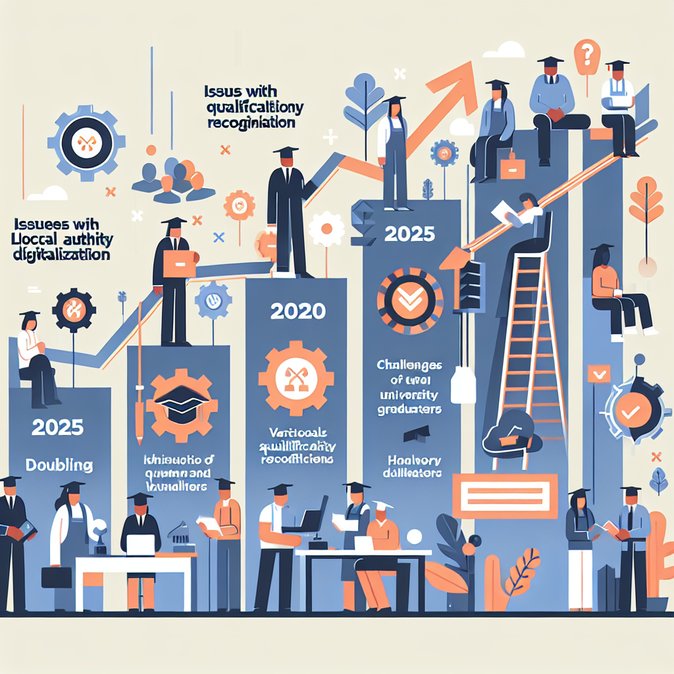
On 18 February 2026 the Federal Employment Agency (BA) published its five-year evaluation of the Skilled Immigration Act, revealing that annual inflows of qualified third-country nationals have risen from 64,000 in 2020 to 128,000 in 2025. The strongest growth came via the so-called Western Balkans Rule and the EU Blue Card track, which together accounted for 62 % of new arrivals last year. The report attributes the increase to lower salary thresholds, expanded occupation lists and tighter cooperation between foreign missions and local chambers of commerce. Notably, 42 % of entrants hold vocational rather than academic qualifications, a shift the BA says is vital for Germany’s Mittelstand, where technicians and master craftspersons are in short supply. Despite progress, processing bottlenecks remain. Average recognition times for non-EU nursing diplomas still exceed six months in several Länder, and only 54 % of employers surveyed rated local foreigners’ authorities as “digital-ready.” The BA urges further harmonisation and highlights the new e-visa portal (launched 20 February) as a key enabler. For HR and mobility teams the data support wider recruitment channels. Experts recommend coupling job offers with fast-track language schemes and relocation assistance to improve retention; one in five skilled immigrants who arrived in 2021 has since left Germany, often citing paperwork fatigue or family-reunification hurdles.