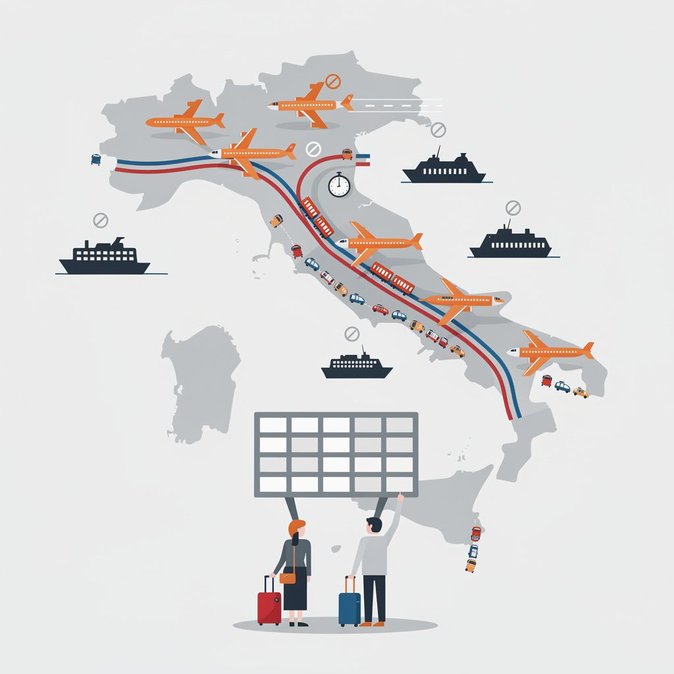
Italy’s summer travel season suffered a major setback today as airport ground-handling staff, security screeners and some easyJet cabin-crew units walked out for 24 hours. The industrial action, running from 00:00 to 23:59 on 21 July 2026, was called by the Filt-Cgil, Uiltrasporti and Ugl-Trasporto Aereo unions after pay-talks with employers’ association Assaeroporto broke down last week. The air-navigation authority ENAC invoked protected time-bands from 07:00–10:00 and 18:00–21:00, during which “essential” services had to operate, but outside those windows hundreds of flights were cancelled or delayed at Rome Fiumicino, Milan Malpensa, Naples and Lamezia Terme. EasyJet grounded more than 90 rotations and urged passengers to rebook or claim refunds, while business-aviation handlers reported slot constraints that forced last-minute diversions to Bologna and Pisa. Travel-management companies estimate that the walk-out will disrupt at least 38,000 corporate itineraries, hitting the pharmaceutical, fashion and consulting sectors hardest at the height of Italy’s quarterly board-meeting cycle. Rail operator Trenitalia added extra high-speed services between Milan and Rome, but seats sold out within hours, highlighting the fragility of multimodal back-up options. Although the strike is scheduled to end tonight, unions warned that further 48-hour stoppages could follow in August unless a new national collective agreement is reached. Employers with critical mobility needs are therefore advised to build contingency days into travel policies, secure flexible hotel rates and consider videoconference alternatives for August project kick-offs. From a compliance perspective, companies should remind posted workers that delays caused by industrial action do not grant automatic extensions to the 90-day Schengen stay limit. HR teams should track overstays carefully—especially for assignees due to exit the Schengen Area near 31 July—to avoid inadvertent visa breaches.