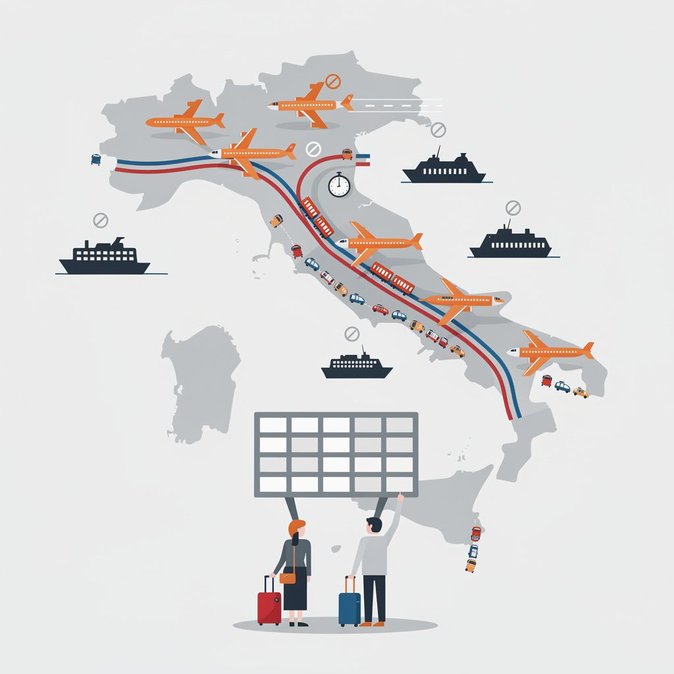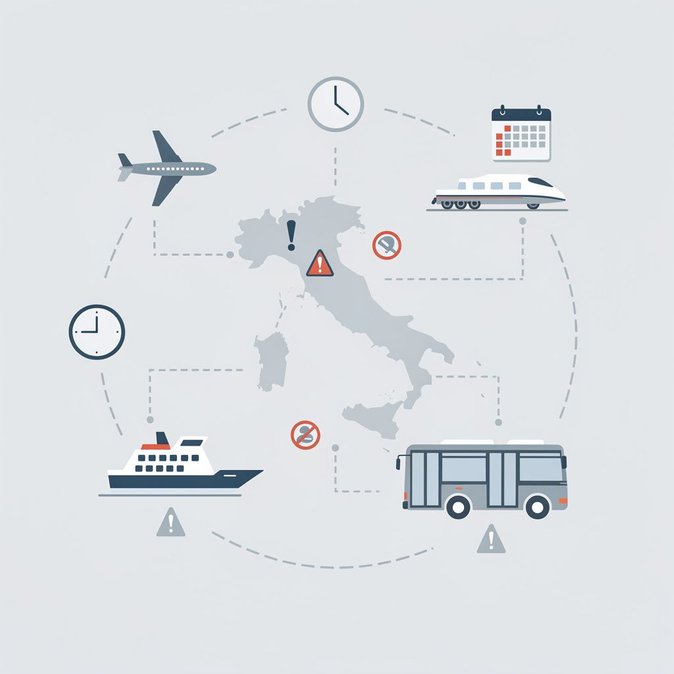
On 21 July Italy’s Ministry of Infrastructure and Transport (MIT) published its latest strike bulletin, a legally mandated digest of all industrial actions planned across the transport sector. The bulletin—available on the MIT «scioperi» portal—lists more than 45 separate stoppages over the next 90 days, eight of which fall between now and 31 July. Highlights include the 24-hour EasyJet strike underway today, a four-hour walk-out by ground-handling staff at Olbia on Sardinia, a national rail stoppage by FS Italiane, Italo and Trenord from 23–24 July, and a 24-hour maritime strike by ferry operator Grandi Navi Veloci beginning at noon on 22 July. The bulletin also details the statutory «fasce di garanzia»—time-bands during which minimum services must run—and lists the trains and flights that operators have declared as guaranteed. The strike calendar is more than a courtesy: under Italian Law 146/1990, businesses and travellers can claim damages only if strikes are not properly notified. Corporates therefore track the MIT list closely to adjust duty-of-care plans, reroute critical cargo or shift crew rotations. Travel managers should note that the bulletin is updated daily; a refresh at 17:00 on 21 July added a regional bus strike in Bergamo for 22 July that had not appeared in the morning edition. MIT officials say digitalisation has cut the average publication lag from 48 hours to six, but unions complain that public visibility makes strikes easier for companies to mitigate—diluting their leverage. The ministry counters that transparency is essential for free movement and that Italy already tops the EU league table for strike days lost. For overseas travellers, the practical takeaway is simple: consult the MIT portal before finalising itineraries and subscribe to airline and rail alerts, as last-minute cancellations remain a distinct possibility if negotiations collapse.