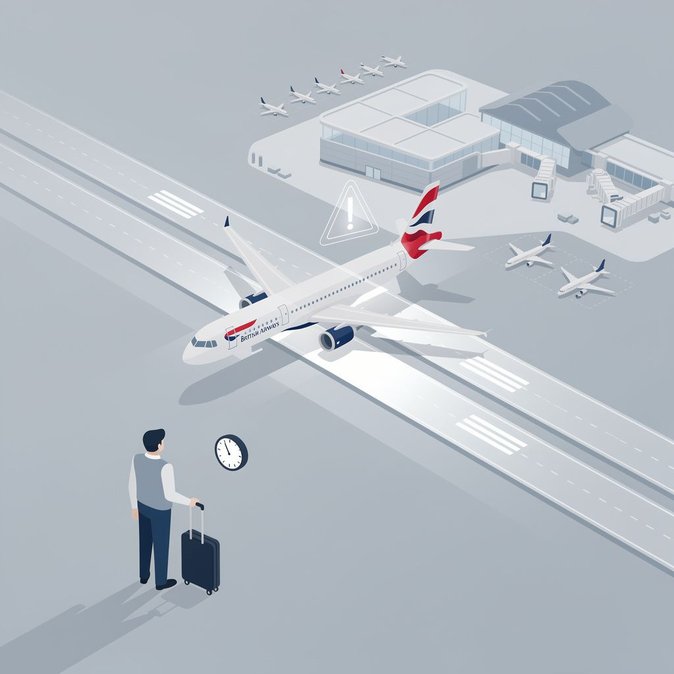
A British Airways Airbus A320 operating flight BA547 from Rome triggered an emergency response at Heathrow on 22 July after the crew reported a hydraulic failure affecting landing-gear deployment. The aircraft declared a ‘squawk 7700’ and executed a go-around before landing safely on its second approach. Because rescue vehicles staged on the northern runway, Heathrow switched to single-runway operations for about ten minutes, causing inbound spacing to increase and some departures to be held on stands. Flight-data feeds show average arrival delays of eight minutes in the two hours following the incident. Although the disruption was short-lived, the episode highlights the tight margins at the world’s second-busiest international hub where a single-runway mode cuts declared capacity by roughly 45 %. For mobility managers the practical lesson is that even minor incidents can trigger rolling knock-ons to connecting itineraries, especially during summer peaks when stand availability is limited. British Airways re-accommodated the 168 passengers onto later flights and is inspecting the aircraft in its engineering base. The UK Air Accidents Investigation Branch has requested the flight-data recorder for analysis but is not treating the event as a serious incident. Travellers with tight same-day connections through Heathrow are advised to allow at least 90 minutes, and companies with time-critical staff should remind employees to register for airline travel alerts and monitor Heathrow NOTAMs during the busy holiday period.
Source: AIRLIVE