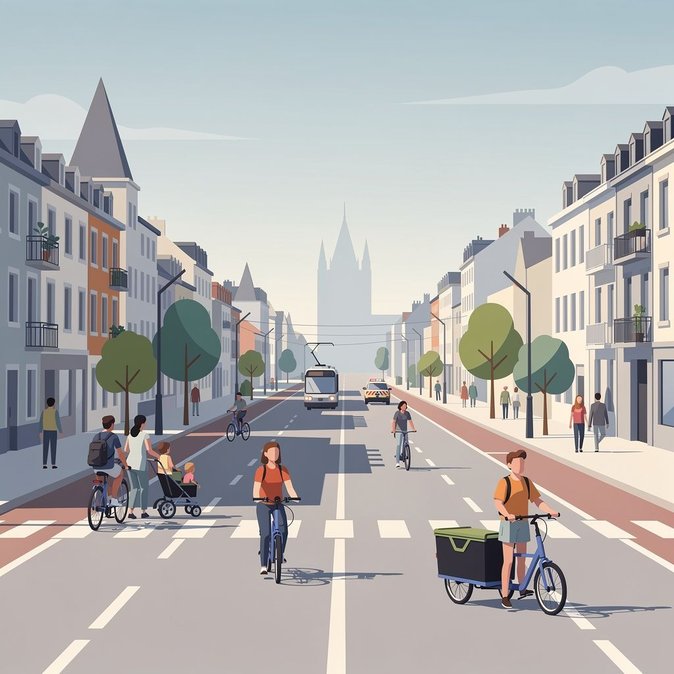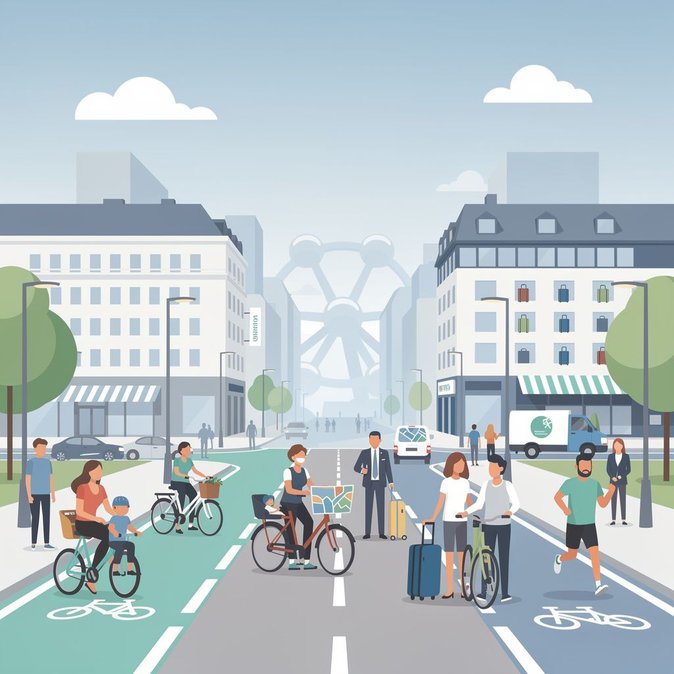
From 09:30 to 19:00 on Sunday, 20 September 2026, the entire Brussels-Capital Region – all 19 municipalities plus parts of the surrounding Flemish belt – banned private motor vehicles for the annual **Car-Free Sunday**, the flagship event of European Mobility Week. Residents and visitors swapped engines for bicycles, e-scooters and sneakers, and 75 km² of streets echoed with music instead of engines. More than 70 other Belgian cities staged parallel initiatives, but Brussels remains the largest contiguous car-free zone in Europe. For international visitors the event created a unique – if occasionally inconvenient – urban experience. Long-haul passengers landing at Brussels Airport found rail links operating normally but taxi services restricted; hotels advised guests to arrive by train or plan a short luggage-trolley walk from the perimeter. Eurostar and Thalys passengers disembarking at Brussels-Midi benefitted from pop-up cycle-hire stations positioned just outside the station concourse. The city authorities emphasise that Car-Free Sunday is more than a one-day festival. Data collected from air-quality sensors last year showed a **32 % drop in NO₂** and a 27 % reduction in particulate matter compared with an average September Sunday, strengthening the case for permanent low-emission zones (LEZ) and higher congestion charges around the inner ring. Mobility minister Elke Van den Brandt told reporters that the day acts as a “live laboratory” for future policy, informing plans to extend the LEZ to Euro 6 diesel vehicles from 2027 and to roll out additional ‘school streets’ where through-traffic is barred during drop-off and pick-up. Businesses located inside the zone are starting to incorporate the day into their branding strategies. Several hotels hosted rooftop yoga sessions and bike-maintenance workshops, while co-working providers opened their terraces for networking brunches aimed at digital nomads. Corporate HR teams responsible for relocation packages increasingly highlight Car-Free Sunday as evidence of Brussels’ commitment to livability – a factor that ranks highly among expatriate talent. Practical take-away: on similar future dates (another car-free day is pencilled in for 2 May 2027) mobility managers should flag the restrictions to employees, book rail tickets early, and remind travellers that rideshare pick-up points move to designated hubs outside the small ring once the ban comes into force.
Source: The Brussels Times