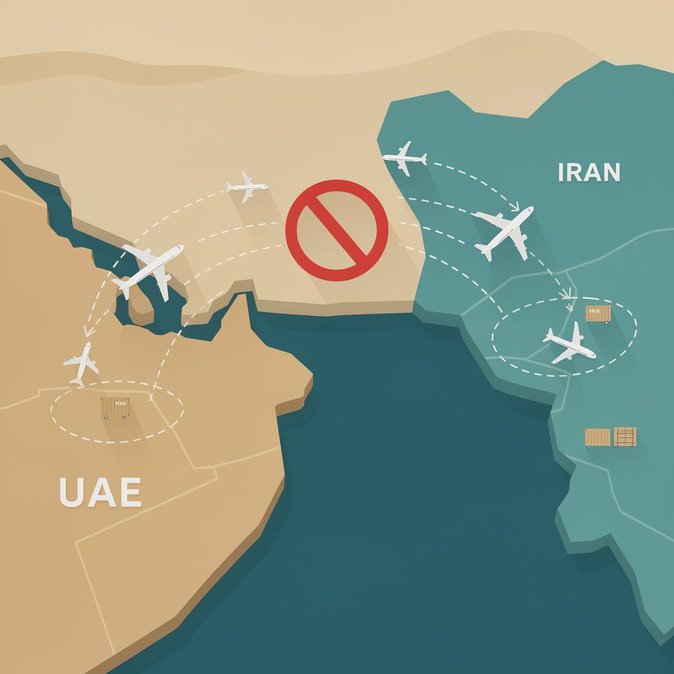
The United Arab Emirates General Civil Aviation Authority (GCAA) abruptly suspended all flights operated by Iranian carriers to and from the UAE late on Thursday, September 24. The regulator said the measure—effective immediately and open-ended—follows a U.S. order barring Iranian airlines from using airports in a growing list of countries. Affected carriers include Iran Air, Mahan Air, Qeshm Air and Kish Air, which together operated more than 70 weekly frequencies into Dubai, Sharjah and Abu Dhabi. The suspension lands at a sensitive moment. Oil prices are already trading above US $106 as Houthi drone attacks on Saudi infrastructure, intermittent rocket fire near Hormuz and a fragile U.S.–Iran diplomatic track rattle markets. For the UAE, aviation is an early pressure point: Iranian carriers bring roughly 7 % of Dubai’s weekly seat capacity and feed critical trade and expatriate flows. The halt forces travellers onto third-country routings via Qatar, Oman or Turkey, adding cost and time while shrinking last-minute inventory during a peak travel weekend. Corporate travel managers should expect knock-on effects beyond the Iran–UAE market. Emirates and flydubai have already widened fuel-surcharge bands, and Etihad has warned of “potential same-day retiming” of some Gulf sectors to avoid air-traffic bottlenecks. Multinationals moving staff between UAE and Iran—or relying on Iranian technical teams rotating into Jebel Ali free-zone projects—must now revisit rota planning, visa sponsorship validity and travel-insurance coverage. Import–export operations also face new friction. Dubai’s Jebel Ali Customs confirmed it will no longer issue temporary import permits for cargo arriving on suspended carriers, compelling shippers to re-manifest goods through alternative hubs. Logistics providers recommend building at least 72 hours of buffer into just-in-time supply chains until routing patterns stabilise. For now the GCAA has not provided a timeline for review, saying only that it is “monitoring evolving regulatory guidance” worldwide. Companies with cross-border mobility requirements should track official channels and revisit duty-of-care protocols, including traveller tracking and emergency evacuation plans, given the fluid geopolitical backdrop.
Source: Gulf News