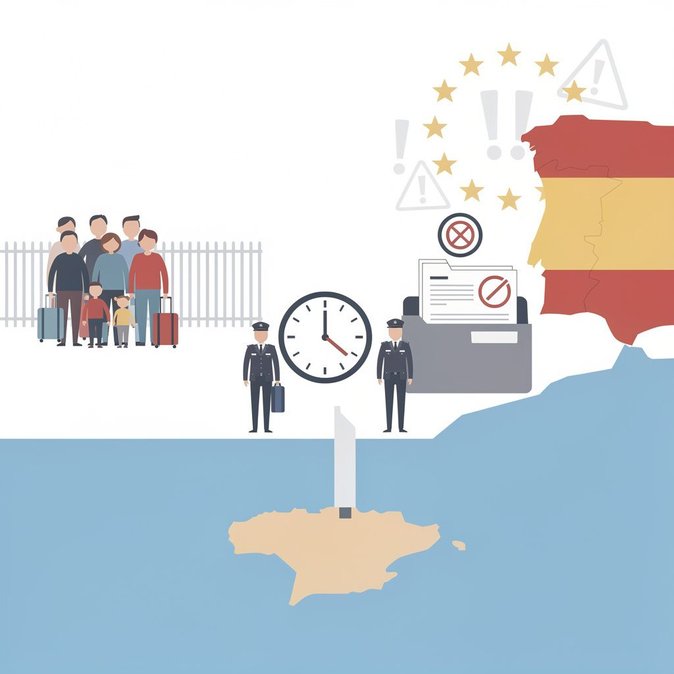
Late on Sunday night, 27 September, investigative outlet elDiario.es published the leaked text of a draft Royal-Decree-Law the Spanish government intends to approve at Tuesday’s cabinet meeting. The 38-page document creates an “extraordinary processing regime” for all protection claims lodged in Ceuta since 30 July and empowers the Directorate-General for International Protection to issue expulsion orders in as little as five days. Under the proposed rules, asylum seekers who leave overcrowded reception facilities or fail to meet tight administrative deadlines could see their applications archived for “implicit withdrawal” and be removed without a full merits review. The decree also suspends the principle of non-refoulement when applicants are deemed a threat to public order—a category defined so broadly that legal scholars fear it could capture anyone involved in protest activity near shelters. Law firms that support corporate relocations say the measure marks the most radical change to Spain’s asylum system since 2009 and may complicate intra-company transfers of North-African staff whose dependants are seeking protection. If enacted, appeals will have to be filed within five calendar days—down from the current 30—leaving HR departments little room to gather supporting documentation from overseas. The United Nations refugee agency (UNHCR) has not been formally consulted. In a statement to elDiario.es, UNHCR Spain noted that “agility and guarantees are not mutually exclusive” and urged the government to respect EU asylum procedure regulations. Brussels is likely to scrutinise the decree closely, as it appears to derogate from several safeguards contained in the still-unfinished Pact on Migration and Asylum. Practical take-away for mobility managers: review any ongoing family-reunification cases routed through Ceuta, alert affected employees to possible interview rescheduling, and budget for accelerated legal costs. Companies with humanitarian sponsorship programmes should track the decree’s passage and be ready to shift filings to mainland offices if the fast-track rules enter into force.
Source: elDiario.es