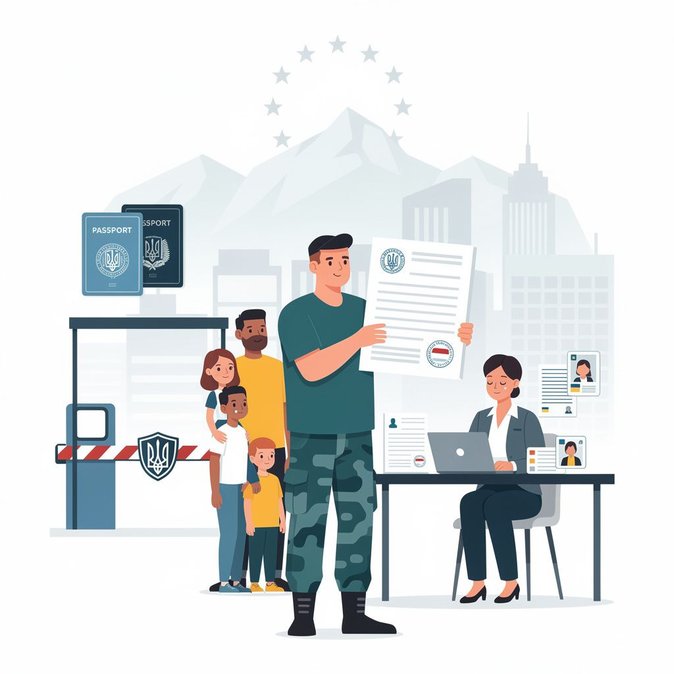
Austria’s federal cabinet has approved a far-reaching amendment to the Displaced Persons Regulation (Vertriebenen-Verordnung) that governs the temporary-protection status granted to people fleeing Russia’s invasion of Ukraine. Under the change, which was endorsed at the 64th Council of Ministers meeting on 30 September and published on 1 October, male Ukrainian nationals who are subject to compulsory military service will only receive Austria’s specially created ‘displaced-person’ residence permit if they can show that they have completed their service or have an official exemption. Proof can include a demobilisation certificate, evidence of disability, or confirmation of a deferment. The new condition applies to Ukrainians who entered Austria on or after 1 August 2026; it does not affect the roughly 98,000 Ukrainians who already hold a valid Austrian temporary-protection card. At the same time, Vienna is extending temporary protection for all eligible Ukrainians until 4 March 2028, bringing Austria into line with the latest EU-wide prolongation. The package also clarifies that beneficiaries cannot hold protection statuses in more than one EU member state simultaneously—a point that global mobility managers have struggled with when relocating staff across internal Schengen borders. According to Interior-Ministry officials, the stricter screening of military-age men is designed to prevent “double protection” and to answer concerns that Austria might become a haven for draft evaders as Ukraine steps up mobilisation. The government emphasises that humanitarian cases—such as fathers of three or more children, carers of disabled relatives, or those medically unfit for service—remain eligible. Practical implications for employers are significant. Corporations sponsoring Ukrainian assignees will now have to verify that any male employee aged 18-60 who arrived after 1 August can meet the new documentation standard before an application for the ‘Ausweis für Vertriebene’ is filed. Mobility teams should build extra lead-time into onboarding, as authorities expect additional due-diligence checks at Vienna’s immigration offices (MA 35) and at district authorities across the Länder. Companies should also audit their existing Ukrainian workforce to confirm that staff who travel frequently do not inadvertently trigger residence-status conflicts in other EU countries. The Interior Ministry has promised detailed guidance in the coming days, but advises Ukrainian nationals to keep original documents with them when they cross Austrian borders—particularly relevant given Austria’s ongoing internal border controls with Czechia, Slovakia, Hungary and Slovenia. Employers are encouraged to brief affected employees immediately and to liaise with relocation providers to update arrival checklists and document templates.