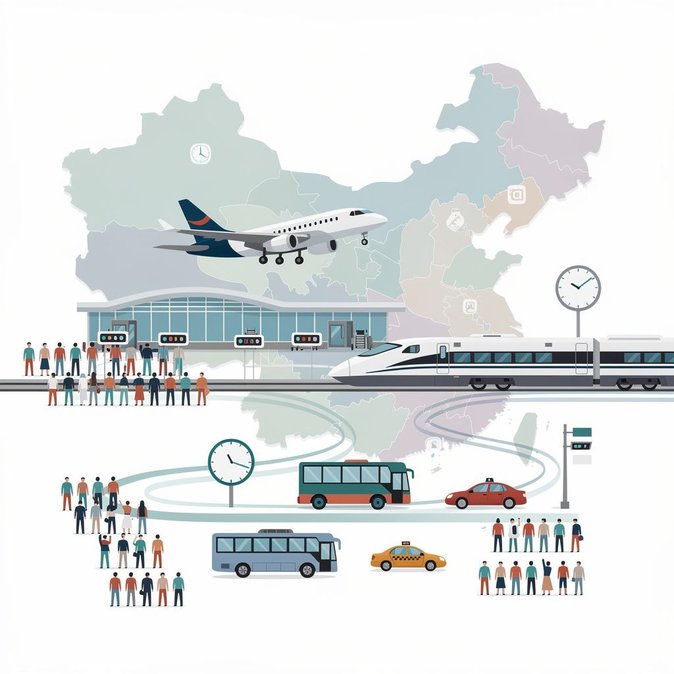
China’s Ministry of Transport (MOT) says domestic and international transport networks moved a staggering 21.42 billion passengers during the National Day period, with rail accounting for 151.9 million and civil aviation 16.9 million trips. Although the headline figure combines internal flows, it also captures connecting legs for inbound and outbound travellers transiting through China’s vast high-speed rail grid. Airports were a focal point: Beijing Capital reported 8,900 aircraft movements in seven days, matching 2019 volumes, while Guangzhou Baiyun hit a new single-day record of 212,000 passengers on 4 October. Aviation throughput held steady compared with 2025 despite typhoon-related cancellations in the south, thanks to slot re-allocation mechanisms introduced by the Civil Aviation Administration of China in July. For multinationals, the key takeaway is network resilience. With rail and road absorbing surges, flight delays averaged 13 minutes—down from 26 minutes last year—cutting knock-on effects for international connections. MOT added that 90 percent of expressway toll booths accepted foreign bank cards or mobile wallets linked to Visa and Mastercard, reflecting a broader push to improve the traveller payment ecosystem. The data bolster forecasts that China’s passenger volume could top 50 billion trips in 2026, cementing its position as the world’s largest integrated transport market and a cornerstone for regional headquarters planning. Companies running country-wide roadshows or internal conferences should, however, avoid the first and last two days of future Golden Weeks, when peak congestion remains most pronounced.
Source: Xinhua