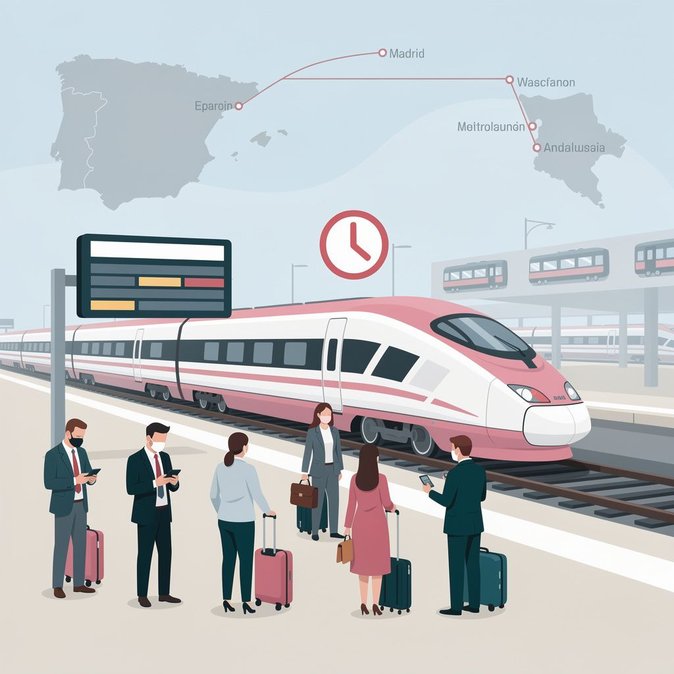
The Spanish Train-Drivers’ Union SEMAF issued a strike notice on 8 October against French-owned low-cost high-speed operator Ouigo. The labour action comprises two 24-hour stoppages on 30 October and 2 November and four partial strikes on 6 and 9 November and 4 and 8 December—dates coinciding with three major holiday bridges. SEMAF accuses Ouigo of “systematic breaches” of the 2024 collective agreement, citing excessive hours, insufficient rest and opaque roster allocation. Ouigo, which runs Madrid–Barcelona, Madrid–Valencia–Alicante and Madrid–Sevilla/Málaga services, said it respects the right to strike but insists it meets contractual terms. The walkouts threaten to disrupt tens of thousands of leisure and business trips just as Renfe adds record capacity (see previous article). Under Spanish law, the Ministry of Transport will shortly set minimum-service levels; past rulings have maintained 70–80 % of runs during rail strikes, but low-cost operators with smaller fleets struggle to re-schedule. Travel managers should build contingency time into itineraries involving Alicante, Elche, Valencia and Barcelona, where Ouigo has significant market share. Clients with non-flexible tickets should monitor Ouigo’s website for rebooking windows that typically open 72 hours before each strike date. If no agreement emerges, SEMAF warns of an “autumn of high conflict on the rails”, potentially affecting the Christmas peak and the January launch of Ouigo’s new Madrid–Bilbao line.
Source: El País