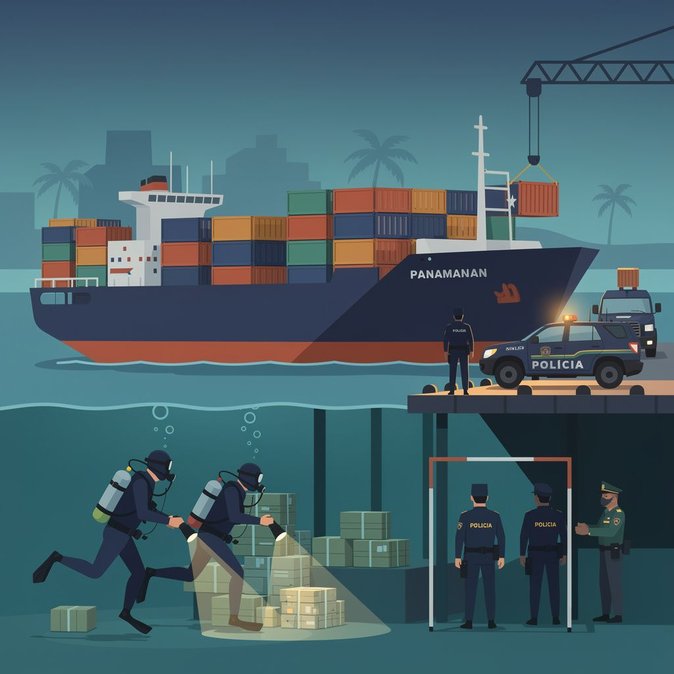
Brazilian law-enforcement authorities scored a major victory against trans-national narcotics trafficking on 8 October when a joint task-force of the Federal Police (PF) and the Bahia Military Police (PM-BA) intercepted a Panamanian-flagged cargo vessel anchored in the Bay of All Saints, Salvador. Acting on intelligence shared by federal customs, the team deployed specialist BOPE and CIPE-Polo divers who searched submerged compartments of the hull and recovered a sizeable consignment of cocaine that investigators say was destined for ports in Western Europe. Although officials have not yet disclosed the exact weight of the shipment, sources close to the operation indicated to local media that the load could exceed half a tonne—placing it among the largest maritime seizures in Bahia this year. The find follows a one-tonne seizure at the Port of Salvador in May and underscores the state’s growing importance as a staging point for organised-crime groups seeking Atlantic routes that bypass the increasingly policed Southeast. For global logistics companies and exporters operating out of northeastern Brazil, the episode is a reminder of intensifying enforcement at ports and anchorages. Customs brokers report that containers flagged as “high risk” are already experiencing longer dwell times as the Receita Federal rolls out new x-ray scanners and risk-profiling algorithms. Maritime insurers, meanwhile, warn that carriers could face higher premiums if routes continue to be exploited by traffickers. Multinationals shipping through Salvador should build two to three extra days into supply-chain schedules over the next fortnight while authorities complete forensic examinations of the vessel and expand spot checks on outbound cargoes. Exporters are also advised to review counter-tampering protocols—especially the use of cable seals and electronic lock devices—to minimise the risk of illicit concealment during road transit to the port. Finally, compliance teams should note that Brazilian legislation (Law 13.445/2017) holds cargo owners co-liable for contraband discovered in their shipments; ensuring robust due-diligence on freight forwarders and subcontracted trucking firms is therefore essential to avoid severe fines and potential suspension of customs licences.