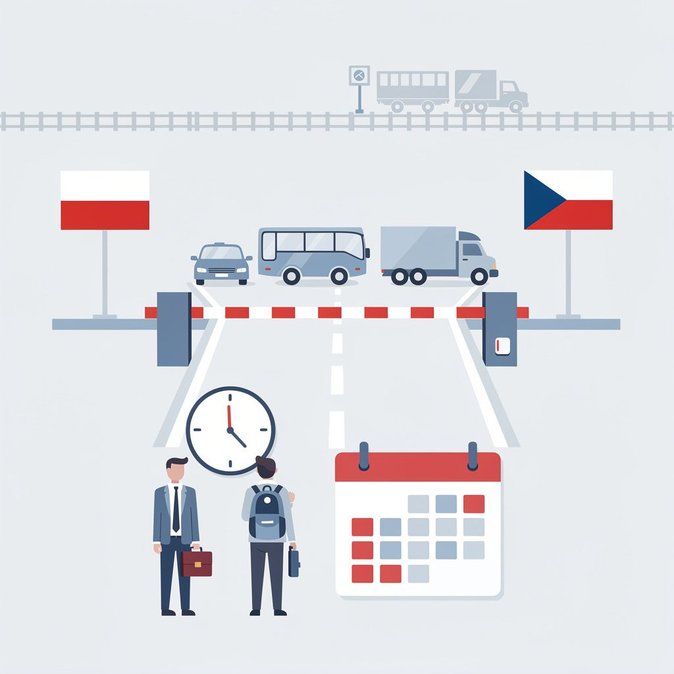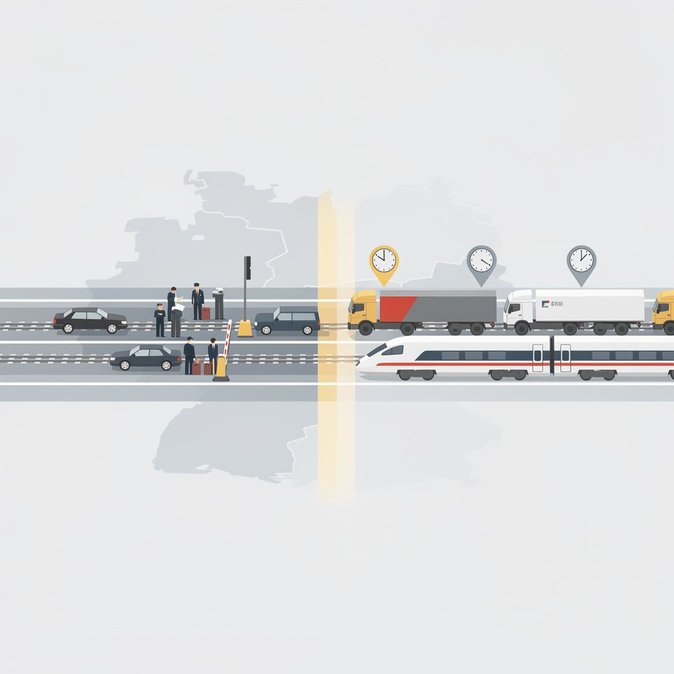
Companies moving goods and personnel between Bavaria and Bohemia face at least five more months of systematic passport checks after Berlin confirmed another six-month extension of its internal Schengen controls. The European Commission’s 12 October 2026 update shows that Germany will maintain controls on all land crossings with the Czech Republic, Poland, Austria, France, Denmark, Switzerland, Luxembourg, Belgium and the Netherlands through 15 March 2027. German Interior Minister Annika Faeser argues that the measure is still needed because asylum applications remain near record highs and smuggling groups rapidly shift routes when pressure eases on one border section. Federal Police say that in the first nine months of 2026 they stopped more than 9 000 people attempting irregular entry along the Czech border—double the figure for the same period of 2025. For Czech exporters, the extension means continued spot checks on the D5 and A6 motorways near Rozvadov / Waidhaus and on regional roads such as Pomezí / Schirnding. Rail passengers on Prague–Munich ICE services and cross-border local trains must still allow time for on-board passport inspections. Air travel is not affected. Travel-management experts recommend that assignees carry proof of accommodation and employment to avoid secondary questioning. Logistics firms have started staggering departure times to avoid morning bottlenecks; automotive suppliers in Plzeň report a 3 % rise in transport costs because of idling trucks. Czech and German chambers of commerce are calling for a joint “fast-lane” pilot using EES biometric pre-clearance to cut wait times without relaxing security. The Schengen Borders Code allows up to three years of internal controls under exceptional circumstances; Germany is now in its second year of consecutive extensions, meaning political pressure for an exit strategy is likely to grow ahead of the 2027 deadline.