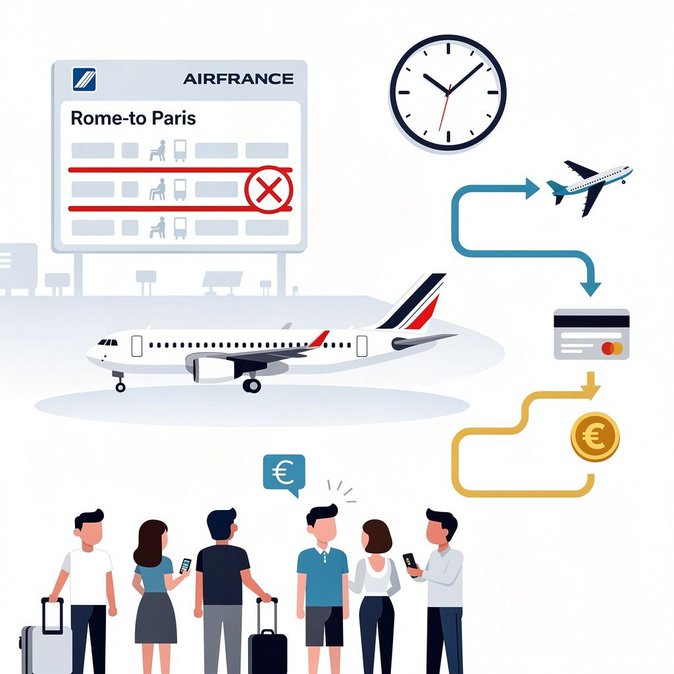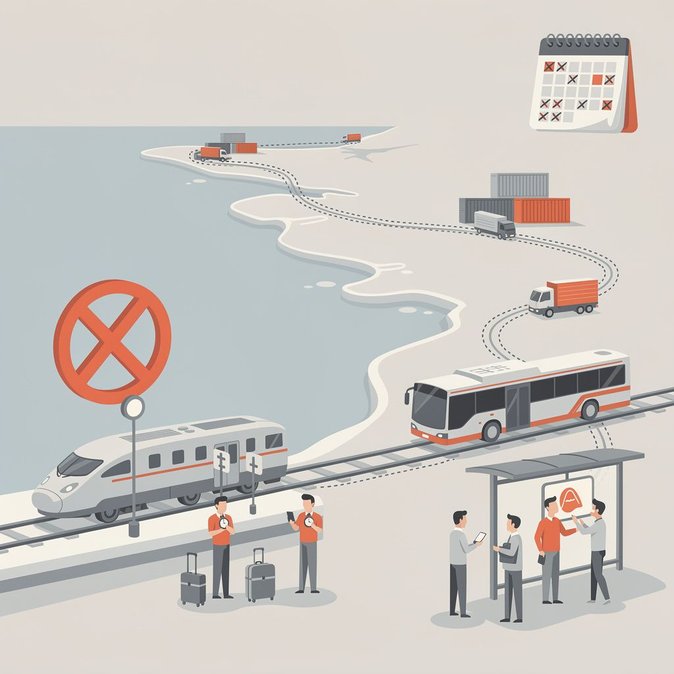
Italy’s autumn strike calendar began in earnest today as separate 24-hour and four-hour stoppages hit rail services in Sicily and local public transport in Bari. According to the Transport Ministry’s strike monitoring portal, infrastructure staff at Rete Ferroviaria Italiana (RFI) in Palermo downed tools from 21:01 on 12 October until 21:00 on 13 October, while drivers at municipal bus operator AMTAB walked out from 08:30 to 12:30. The rail strike, called by the UILT-UIL union, is affecting both passenger and freight traffic on the Palermo–Catania and Palermo–Messina corridors, with Trenitalia forced to cancel or reroute dozens of Intercity and regional trains. Minimum-service obligations guarantee a skeleton timetable during the morning and evening rush hours, but business travellers should expect gaps of up to three hours between services. Cargo customers moving perishables from the port of Augusta onto the mainland may face knock-on delays as freight paths are re-allocated once the strike ends. In Bari, the protest centres on staffing levels and maintenance budgets. Although the walk-out was limited to four hours, morning peak routes to the industrial zones of Modugno and Valenzano ran at roughly 30 per cent of normal frequency. Employers with just-in-time production lines reported late shift arrivals, highlighting the vulnerability of last-mile mobility even when national networks remain operational. Both actions are part of a broader wave of sectoral strikes that stretch into mid-October, including a nationwide aviation strike announced for 16 October. Companies relying on domestic travel for project work or expatriate rotations should monitor the official MIT strike calendar and pre-book hotel contingencies. Under Italian law, workers are not entitled to salary during a strike day, but posted workers whose travel plans are disrupted are still eligible for per-diem allowances if overnight stays become necessary. For mobility managers, the immediate step is to invoke travel-policy exceptions that allow the use of rental cars or ride-sharing when public transport is unavailable and to remind travelling staff that taxi receipts must include the driver’s VAT number to remain tax-deductible.