
After seven years of reconstruction, the new Huanggang Port on the Shenzhen–Hong Kong border opened to the public at 06:30 on 12 October. People’s Daily reports that the glass-roofed terminal is now the world’s largest single-building land-port facility, designed to handle 300,000 passengers and 30,000 vehicles a day. Opening-day travellers said the entire process—from document scan to exit—took ‘a few minutes’, compared with 30 minutes under the old two-step inspection model. The secret is “co-location”. Officers from Shenzhen Immigration, Shenzhen Customs, Hong Kong Immigration, Hong Kong Customs and the Hong Kong Department of Health sit side-by-side inside a single hall; travellers queue once, complete biometric capture once and receive a single clearance that is recognised by both jurisdictions. Vehicles use newly-built “5-in-1” lanes that integrate all regulatory checks; pilot tests show average processing times falling from ten minutes to two. For cross-border commuters and suppliers shuttling between Hong Kong’s financial centre and Shenzhen’s tech clusters, the gains are immediate. A Hong Kong marketing executive who crosses daily to a Shenzhen design studio told reporters she now has “an extra 40 minutes” each morning—time she plans to spend on client calls rather than immigration lines. Logistics firms expect similar efficiencies: same-day pick-up and delivery routes can add an extra turn, boosting capacity by up to 15 percent. From a policy perspective, Huanggang’s upgrade aligns with the Greater Bay Area blueprint, which calls for friction-free movement of people, capital and data among Hong Kong, Macau and nine Guangdong cities. Authorities hint the port will become a test bed for wider “smart port” initiatives, including facial-recognition lanes for APEC Business Travel Card holders and a digital import-export carnet that could further streamline cross-boundary trade. Early success is likely to accelerate similar rebuilds at Lok Ma Chau and Shenzhen Bay, cementing a regional network of one-stop border posts. For multinational employers, the message is clear: moving staff and goods between the SAR and the mainland just became faster, cheaper and more predictable. Companies with dual-city operations should update travel policies to take advantage of 24-hour clearance, brief employees on the new single-queue system and, where relevant, renegotiate service-level agreements with cross-border couriers that can now guarantee tighter delivery windows.
How VisaHQ can help
VisaHQ simplifies the visa application process for individuals and businesses. Check current travel requirements, prepare the required documents and manage your application online through the VisaHQ China portal.More From China
View all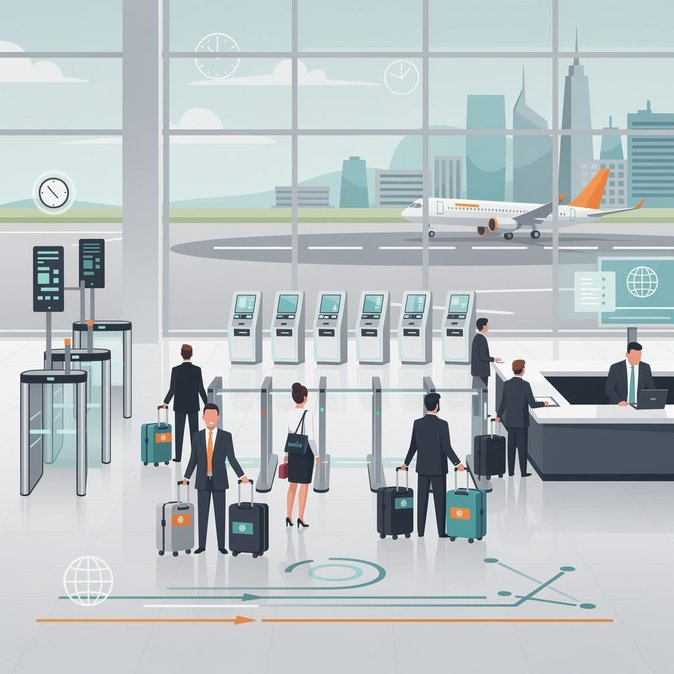
Guangzhou Ramps Up Fast-Track Border Services as 140th Canton Fair Brings Surge of Overseas Visitors
China and North Korea to Open New Yalu River Bridge on 15 October, Creating First Modern Road Link