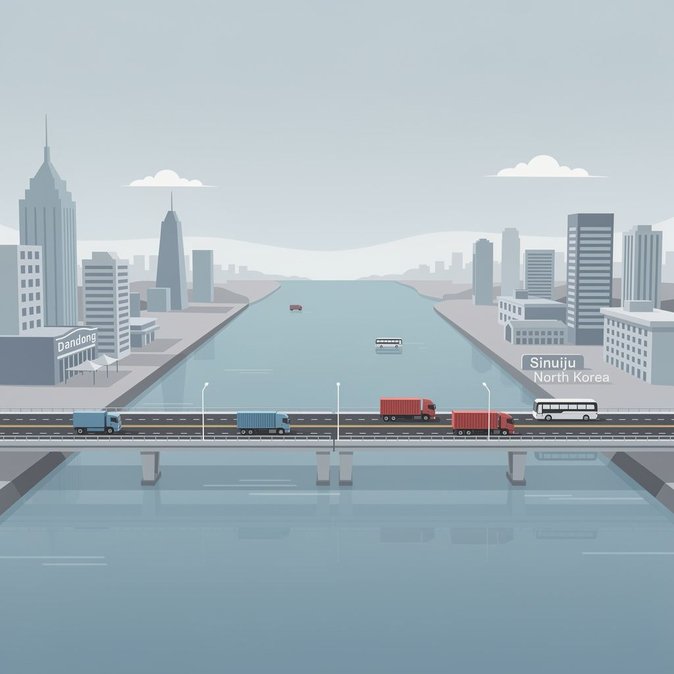
China’s Ministry of Foreign Affairs confirmed on 14 October that the long-delayed New Yalu River Bridge linking Dandong in Liaoning Province with Sinuiju in North Korea will finally open on 15 October. Built at a cost of roughly RMB 2.2 billion and completed structurally in 2014, the 3-kilometre cable-stayed bridge had stood idle for more than a decade while the two governments negotiated customs and immigration facilities. With checkpoints now finished on both banks, the bridge will provide the first four-lane highway connection between the two neighbours, supplementing the 1943 single-track Sino-Korean Friendship Bridge that currently handles all road and rail traffic. MFA spokesperson Mao Ning told reporters the new span “will further facilitate bilateral trade and people-to-people exchanges and enhance the wellbeing of our two peoples.” In the short term, use is expected to focus on commercial cargo: group tourism to North Korea remains suspended and the DPRK has yet to restore routine visa issuance. Freight forwarders in Dandong anticipate that container trucks now forced to queue for up to 24 hours at the old bridge will be able to cross in under two, increasing daily capacity three- to four-fold. Chinese exporters of construction materials and consumer goods, as well as importers of North Korean seafood and minerals, stand to benefit. Longer term, transport economists see strategic implications. The bridge connects directly to China’s G1112 Dandong–Fuxin Expressway and ultimately to the north-south coastal corridor, giving North Korea a modern road outlet to Chinese ports and manufacturing hubs. Analysts say this could support future special economic zones along the border, echoing the Kaesong model. Businesses with interests in northeast Asia should monitor regulatory notices: customs declarations will initially be paper-based, but a joint electronic manifest is reportedly under development. Firms shipping dual-use goods must note that UN sanctions continue to apply and Chinese authorities have pledged strict inspection regimes at the new crossing.
Source: Xinhua
How VisaHQ can help
VisaHQ simplifies the visa application process for individuals and businesses. Check current travel requirements, prepare the required documents and manage your application online through the VisaHQ China portal.More From China
View all
Guangzhou Ramps Up Fast-Track Border Services as 140th Canton Fair Brings Surge of Overseas Visitors

Huanggang Port Reopens With 24-Hour One-Stop Clearance, Transforming Shenzhen–Hong Kong Cross-Border Travel