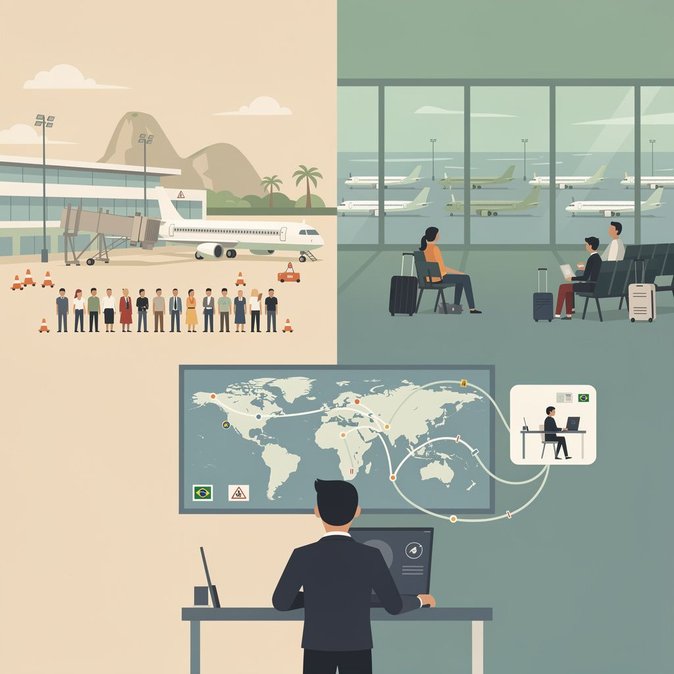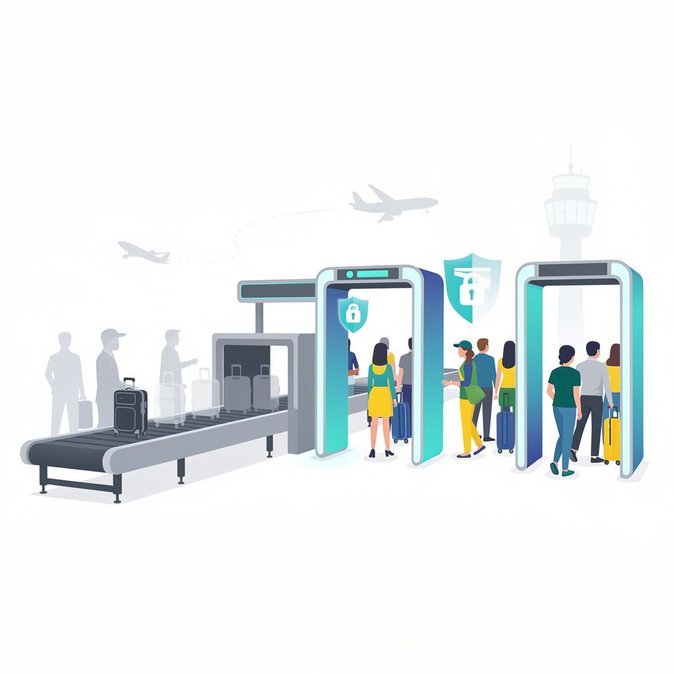
In a move that aviation executives have been expecting for months, Brazil’s National Civil Aviation Agency (ANAC) published Resolution 817/2026 in the Official Gazette on 14 October and, a day later, formally notified airport concessionaires of the new rules. The measure requires every commercial airport in Brazil—whether run by Infra SA or by private concessionaires—to replace legacy single-view X-ray machines with 3-D computed-tomography scanners and millimetre-wave body scanners on all inspection lanes. Larger hubs such as São Paulo/Guarulhos, Brasília and Rio de Janeiro/Galeão must complete the replacement within 180 days, while regional facilities that handle fewer than two million passengers a year have up to 36 months. ANAC explains that the upgrade brings Brazil in line with ICAO’s latest Aviation Security Manual and with the European Civil Aviation Conference’s Standard 3 certification. Passengers will be allowed to leave laptops and approved liquids inside bags, reducing queuing times and improving the business-traveller experience. The scanners must be able to integrate with biometrics and the government’s C3IA threat-data platform so that real-time risk scores can determine the level of screening required. For airport operators, the capital expenditure is significant—estimated at R$ 1.6 billion nationwide—but may be financed through tariff rebalancing or via the national Airport Development Fund. Concession contracts already signed will have to be amended. Suppliers such as Smiths Detection, Rapiscan and IDSS have begun road-shows in Brazil to demonstrate equipment that meets the technical annexes of the resolution. Corporate travel managers should build in extra time for security checks during the transition period, as mixed lanes using both old and new equipment tend to slow throughput. Airlines will also need to update crew-briefing materials and Minimum Connection Time calculations once the more streamlined process is in place. Ultimately, the measure is expected to cut false-alarm rates by 40 %, reduce overall passenger dwell time in terminals and enhance Brazil’s attractiveness for large international events—including FIFA’s 2027 Women’s World Cup, which the country is bidding to host. Companies that move high-value cargo will also benefit because air-freight terminals are included in the modernisation plan.
Source: AEROIN / ANAC