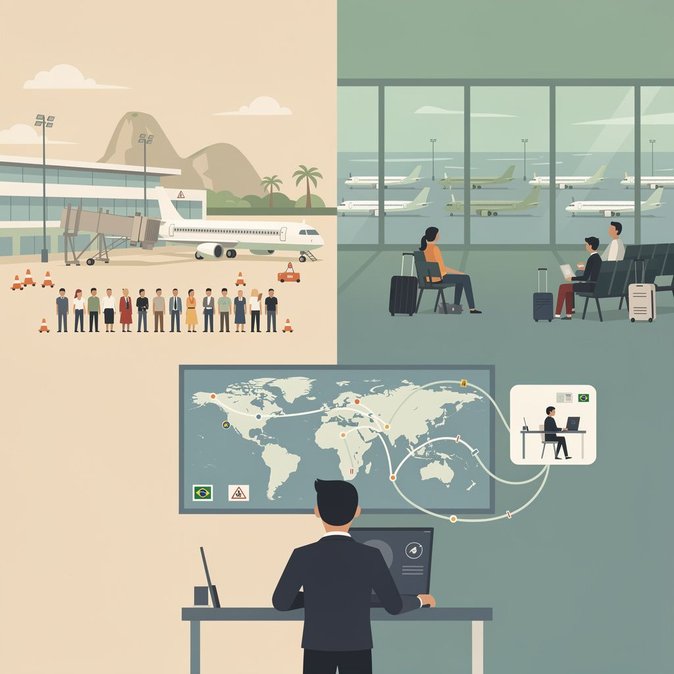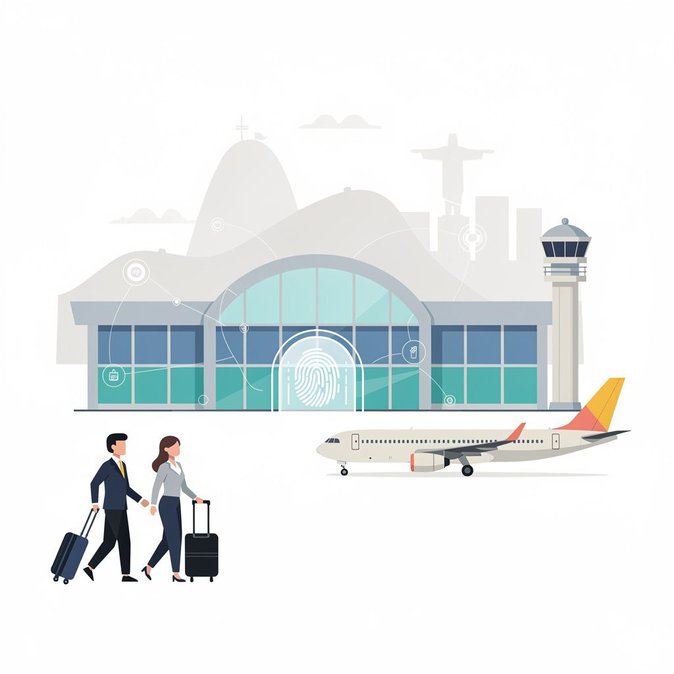
Brazil’s National Civil Aviation Agency (ANAC) confirmed this morning (15 October 2026) that the ‘assisted sale’ of Rio de Janeiro/Galeão–Antonio Carlos Jobim International Airport has been legally consummated. The winning bidder—Spanish airport operator Aena—took control of 100 percent of the concessionaire on 6 October after wiring an upfront payment of R$ 2.9 billion and accepting all contractual liabilities. Although the transaction closed nine days ago, ANAC waited for clearance from Brazil’s audit court (TCU) and the competition authority (CADE) before issuing today’s bulletin. The new shareholder agreement obliges Aena to invest at least R$ 4.7 billion by 2029, with priority given to expanding the international pier, modernising Federal Police and customs facilities, and installing next-generation CT scanners that allow passengers to keep electronics and liquids in their hand luggage. For multinational companies, Galeão is the main gateway for oil-and-gas personnel heading to Campos Basin and for executives visiting Rio’s fast-growing tech corridor. ANAC estimates that the upgrades will raise peak-hour capacity by 35 percent and cut average arrival processing times from 38 minutes to 22 minutes by 2028—critical ahead of the 2027 Pan-American Games, when daily international arrivals are expected to double. The agency also pledged to integrate the airport’s new biometrics corridor with Brazil’s gov.br digital ID platform so that Brazilian nationals can clear immigration using facial recognition only. Business-travel managers should monitor construction timelines closely: two boarding satellite areas will be temporarily closed between April and July 2027, and lane closures on the “Linha Vermelha” expressway may lengthen transfer times to downtown hotels. Aena says it will publish monthly progress dashboards in English and Portuguese to help corporates adjust duty-of-care plans. In the medium term, observers expect Galeão’s turnaround to intensify competition with São Paulo‐Guarulhos for long-haul traffic. Lufthansa Group has already applied for additional slots, while Delta is evaluating a direct Rio–Atlanta cargo service once the upgraded customs facility becomes operational. If these plans materialise, mobility teams could gain more routings and price leverage for trans-Atlantic itineraries.
Source: Eutrópio / ANAC briefing