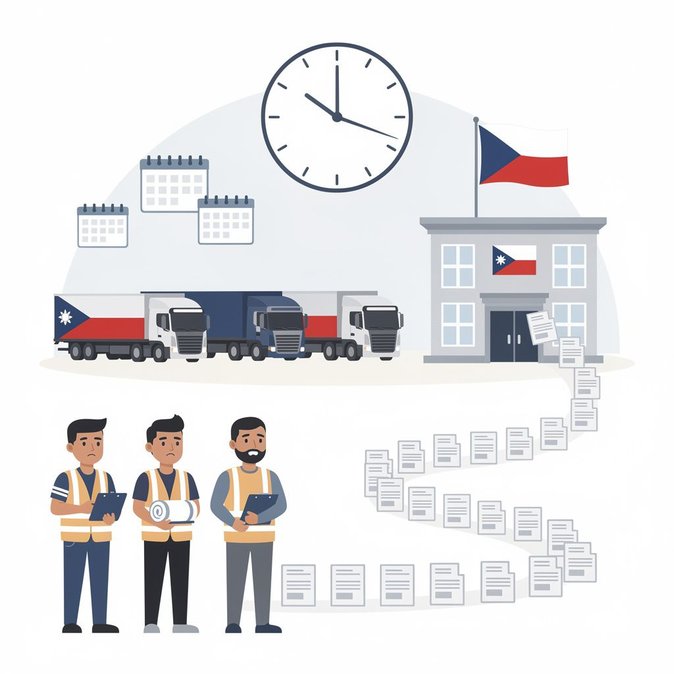
Czech logistics companies are turning to the Philippines to fill chronic driver shortages, but restrictive annual quotas and opaque processing times are slowing recruitment, industry portal Systémy Logistiky reported on 19 October. The “Qualified Employee” migration programme caps Filipino intakes at 10 300 per year—split into monthly sub-quotas that were fully exhausted in July, August and September. Personnel agency GrapeCare says lead times have stretched from six to as much as ten months, leaving employers unable to forecast start dates. Without visibility on where their applications sit in the queue, firms struggle to align new hires with contract deadlines, fleet expansion and accommodation planning. The government plans to raise the Filipino quota to 12 000 in January 2027, yet critics argue that keeping rigid monthly limits—and forbidding roll-over of unused slots—will perpetuate backlog cycles. Business groups also call for real-time publication of pending application numbers and extra consular staff at Manila to accelerate visa issuance. Case studies from carriers such as TQM and ČSAD Uherské Hradiště show that once drivers arrive, on-boarding can be rapid; however, the initial administrative marathon lasts up to two years, involving visa paperwork, Czech driver-licence conversion and vocational training. Companies therefore need long-range workforce planning and should budget for language courses, compliance checks and dual-crewed familiarisation runs. For global mobility and HR teams the story underlines how Czechia’s quota regime—though more generous than many EU peers—still demands early, data-driven forecasting. Firms recruiting outside the EU should monitor 2027 rule changes, lobby for carry-over flexibility, and invest in HR information systems that can track multi-agency milestones to mitigate costly delays.
Source: Systemylogistiky.cz