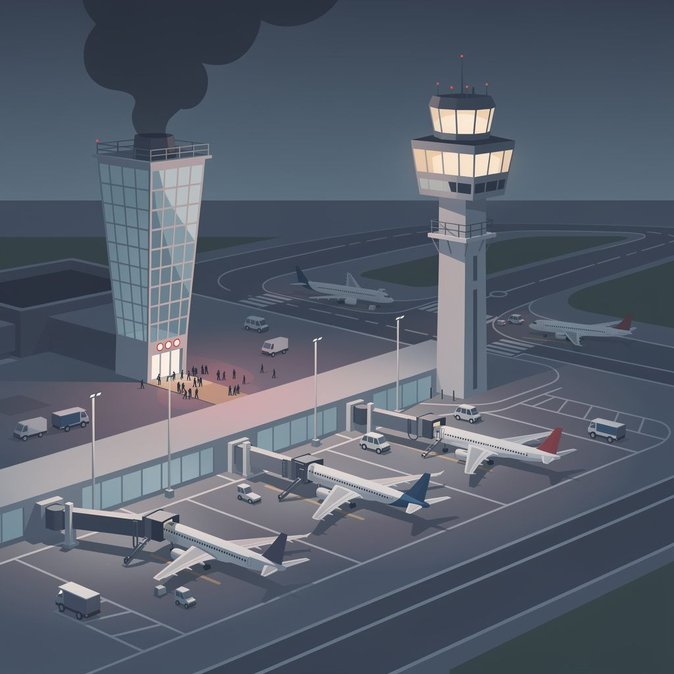
Ground operations at Toronto Pearson International Airport were disrupted for several hours on 22 October after smoke forced the evacuation of the apron-management unit tower that coordinates aircraft movements around gates and loading areas. Although NAV Canada’s main air-traffic-control tower remained operational, the apron shutdown delayed dozens of arriving and departing flights as aircraft waited for ground-movement clearance. Air Canada described the incident as a “safety event beyond the airline’s control” and warned customers to monitor flight-status alerts. By mid-afternoon, most delays averaged 60–90 minutes, but a handful of transcontinental departures were pushed back more than three hours. The Greater Toronto Airports Authority (GTAA) said normal apron operations resumed after engineers ventilated the tower and confirmed no structural damage. Toronto Pearson is Canada’s primary hub for international business travel; any disruption there quickly cascades across domestic connectors in Vancouver, Calgary and Montréal. Corporate travel managers should review re-routing options through Billy Bishop Toronto City Airport or Montréal-Trudeau if tight connection windows are critical. The episode also exposes a single-point-of-failure risk: apron control is separate from air-traffic control, so contingency plans for ground-movement outages—such as deploying mobile apron teams—may need updating. GTAA officials said they will “assess redundancy measures” as part of the incident review. For now, airlines report schedules back on track, but carriers are advising passengers travelling over the next 48 hours to leave extra transfer time because aircraft and crews remain out of rotation in some markets.
Source: Travel & Tour News