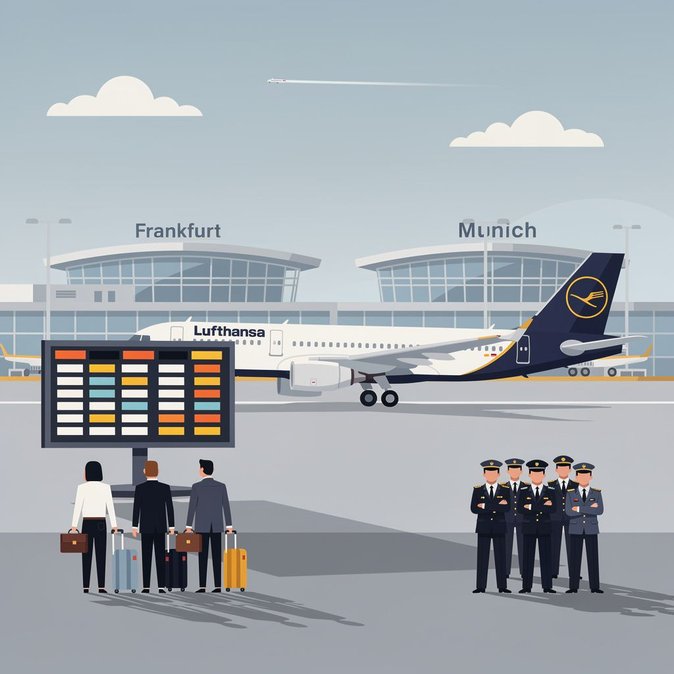
Germany’s largest airline and its 5,000-strong pilots’ union, Vereinigung Cockpit (VC), abandoned a court-supervised arbitration round late on 22 October after eleven days of talks produced “no binding outcome.” The two ex-state premiers who acted as mediators—Roland Koch (CDU) and Bodo Ramelow (Die Linke)—declined to table their own compromise proposal, instead handing both sides a catalogue of ‘recommendations’ for a broader, still-ongoing mediation about pay scales, pensions and fleet strategy. The collapse revives the wage dispute that triggered seven one-day walk-outs earlier this year and cost Lufthansa an estimated €180 million in direct disruption costs. Although VC said it “does not currently plan immediate industrial action,” union officials warned that strike ballots could be relaunched “at short notice” if the parallel mediation fails to deliver progress before the busy Christmas-New-Year period. For business travellers, any strike by cockpit crews typically forces wholesale cancellations on the carrier’s Frankfurt and Munich hub banks, cascading across Star Alliance partners worldwide. Behind the pay conflict lies a strategic row over Lufthansa management’s plan to transfer up to 25 wide-body aircraft to lower-cost subsidiaries such as CityLine 2 and the new Ocean platform. VC fears the move will hollow out employment at the core brand and erode collectively-bargained conditions. Management counters that cost flexibility is essential if the group is to finance its €12 billion fleet renewal and compete with Gulf carriers on long-haul. Travellers with Q4 itineraries are advised to build extra lay-over time into connection plans, book refundable fares where possible and enrol in Lufthansa’s automated rebooking alerts. Corporate mobility managers should also check interline agreements with train operator Deutsche Bahn (which is often activated during strikes) and ensure that travel policies allow for fast switching to partner airlines such as Swiss or United in case of mass cancellations. In the longer term, unresolved labour unrest could undermine Germany’s goal of positioning Frankfurt as a resilient intercontinental hub ahead of the EU Entry/Exit System’s formal go-live in late-2027, when processing bottlenecks will already tighten turnaround times.
Source: Reuters via Onvista