Italy has formally ratified the pending protocol to its 2020 frontier-workers agreement with Switzerland, publishing Law 217/2025 in the Official Gazette on 21 January 2026. The protocol – signed in May 2024 but awaiting parliamentary approval – modernises a decades-old tax regime that struggled to keep pace with hybrid work.
Key changes include:
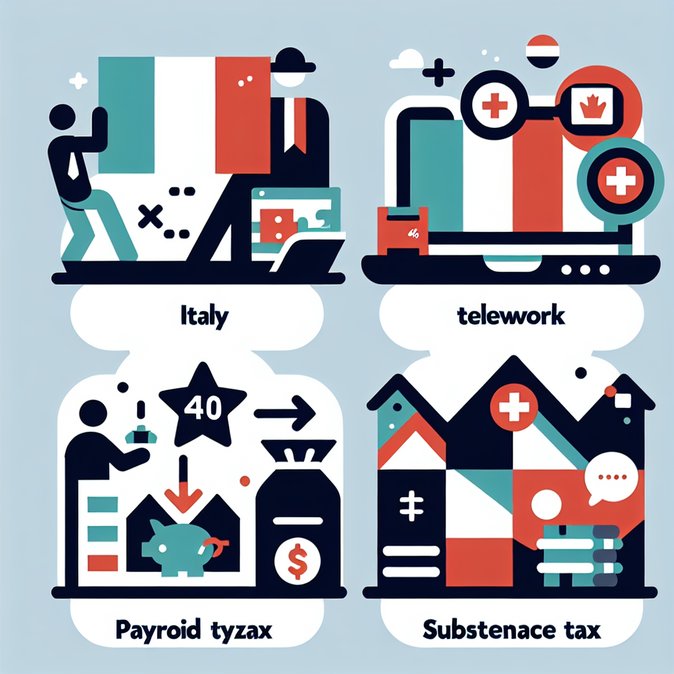
• A definition of ‘telework’ that caps remote work performed in the country of residence (Italy or Switzerland) at 40 % of total working time before tax liability shifts.
• An automatic exchange of payroll data between Italian and Swiss tax authorities from 2027, easing compliance checks.
• A simplified substitute-tax option for new Italian frontier workers, set at 25 % of Swiss income tax paid, eliminating double-tax paperwork.
![Italy Ratifies Telework Protocol with Switzerland, Clarifying Tax for Frontier Workers]()
The protocol will enter into force once both countries exchange ratification instruments – expected mid-2026 – and will replace the temporary Covid-era telework accord due to lapse this year.
For the 80,000-plus Italians who cross the border daily (and the growing cohort who now work partly from home), the agreement brings welcome certainty on where social-security and income-tax obligations fall. Employers must now adapt time-tracking systems, update assignment contracts and secure A1 certificates for staff who exceed the 40 % threshold. Advisers recommend mapping employee work-patterns early in 2026 to avoid unexpected payroll corrections once the protocol is live.
Key changes include:
• A definition of ‘telework’ that caps remote work performed in the country of residence (Italy or Switzerland) at 40 % of total working time before tax liability shifts.
• An automatic exchange of payroll data between Italian and Swiss tax authorities from 2027, easing compliance checks.
• A simplified substitute-tax option for new Italian frontier workers, set at 25 % of Swiss income tax paid, eliminating double-tax paperwork.

The protocol will enter into force once both countries exchange ratification instruments – expected mid-2026 – and will replace the temporary Covid-era telework accord due to lapse this year.
For the 80,000-plus Italians who cross the border daily (and the growing cohort who now work partly from home), the agreement brings welcome certainty on where social-security and income-tax obligations fall. Employers must now adapt time-tracking systems, update assignment contracts and secure A1 certificates for staff who exceed the 40 % threshold. Advisers recommend mapping employee work-patterns early in 2026 to avoid unexpected payroll corrections once the protocol is live.
Source: Orbitax