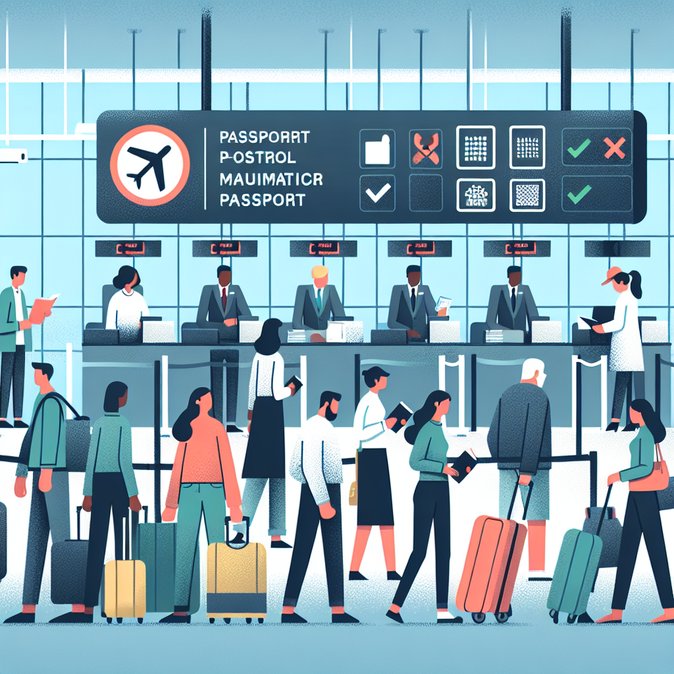
A seemingly routine Friday evening quickly turned into a stress test for Belgium’s main international gateway. At 18:30 on 6 February, all 24 automated e-gates in Brussels Airport’s non-Schengen arrivals hall went offline after a software failure in the federal police’s border-control platform. The outage, first reported by Travel Tomorrow and confirmed by the airport authority, forced officers to revert to fully manual inspection of every passport.
By Saturday lunchtime – the peak arrival bank for long-haul flights – waiting times stretched to 90 minutes as EU, EEA and Swiss passengers queued alongside third-country nationals. Airlines were instructed to hold some departures to protect misconnections, while ground-handling crews scrambled to re-allocate staff. According to Brussels Airport Company, normal service did not resume until late Saturday evening after engineers patched the faulty module.
![Software glitch forces manual passport checks at Brussels Airport, causing hours-long queues]()
The incident lays bare the fragility of border-automation infrastructure just months before the EU’s new Entry/Exit System (EES) becomes mandatory in April 2026. Industry groups have repeatedly warned that even short-lived technical failures could snarl terminals if fallback staffing plans are inadequate. The airport has 36 e-gates on order to handle EES biometric enrolment but, as the Belgian Airline Pilots Association notes, “resilience matters as much as capacity.”
Business-travel managers should prepare for intermittent disruption during the 2026 rollout: the airport now advises non-Schengen travellers to arrive three hours before departure and to monitor carrier alerts closely. Companies moving talent through Brussels may also wish to stagger Monday-morning starts or build extra buffer days into assignment schedules until EES stability is proven.
By Saturday lunchtime – the peak arrival bank for long-haul flights – waiting times stretched to 90 minutes as EU, EEA and Swiss passengers queued alongside third-country nationals. Airlines were instructed to hold some departures to protect misconnections, while ground-handling crews scrambled to re-allocate staff. According to Brussels Airport Company, normal service did not resume until late Saturday evening after engineers patched the faulty module.

The incident lays bare the fragility of border-automation infrastructure just months before the EU’s new Entry/Exit System (EES) becomes mandatory in April 2026. Industry groups have repeatedly warned that even short-lived technical failures could snarl terminals if fallback staffing plans are inadequate. The airport has 36 e-gates on order to handle EES biometric enrolment but, as the Belgian Airline Pilots Association notes, “resilience matters as much as capacity.”
Business-travel managers should prepare for intermittent disruption during the 2026 rollout: the airport now advises non-Schengen travellers to arrive three hours before departure and to monitor carrier alerts closely. Companies moving talent through Brussels may also wish to stagger Monday-morning starts or build extra buffer days into assignment schedules until EES stability is proven.
Source: Travel Tomorrow