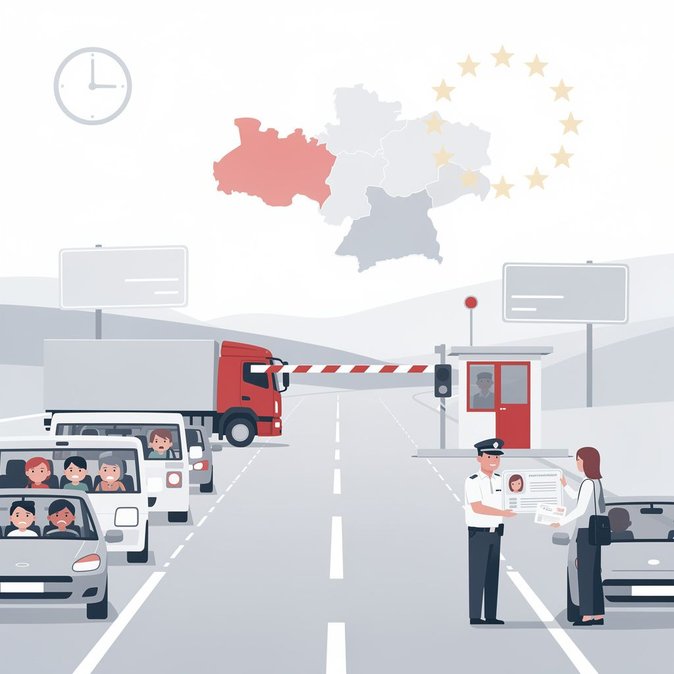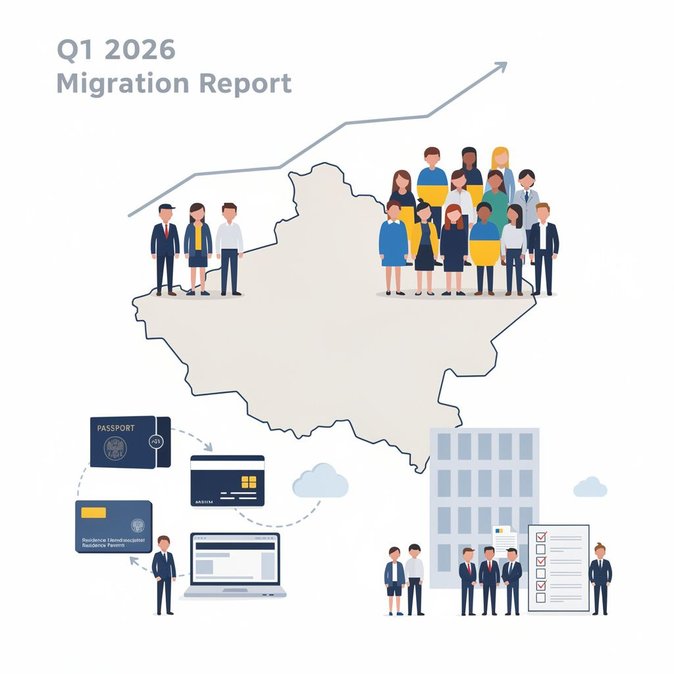
Just before midnight on 12 June, the long-debated EU Migration & Asylum Pact officially entered into force across all 27 member states. The new legislative package introduces compulsory screening of all non-EU arrivals, accelerated asylum and return procedures at the external borders, a mandatory biometric database, and – most controversially – a ‘solidarity mechanism’ that requires each member state to either accept a quota of asylum-seekers or pay an annual financial contribution. For the Czech Republic, the start of the pact is more than a technical milestone. Interior Minister Lubomír Metnar confirmed that Prague has formally requested a one-year derogation from the solidarity mechanism, arguing that the country is already hosting over half a million Ukrainian refugees under temporary protection. While the European Commission has signalled flexibility for 2026, Czech officials fear steep penalties in future years if their exemption is not renewed. Businesses that depend on intra-EU assignments or seasonal non-EU labour should therefore monitor whether Prague eventually agrees to financial contributions or limited relocations, as any reduction in EU funding could translate into tighter national visa quotas. The pact also streamlines the Schengen Borders Code revision, allowing frontline states such as Italy, Spain and Greece to keep asylum-seekers in new border ‘screening centres’ for up to 12 weeks. Czech corporations with operations in those countries should anticipate longer lead-times for bringing non-EU talent to client sites, and advise travelling staff to carry proof of residence or work authorisation when transiting external Schengen frontiers. From a compliance perspective, Czech employers must now verify that all third-country assignees entering the bloc have been biometrically enrolled in the forthcoming Entry/Exit System (EES). HR departments are urged to update posted-worker checklists, as failure to record a timely exit could trigger automated overstay alerts once EES goes live in autumn 2026. Multinationals should also revisit crisis-management plans: the pact empowers EU agencies to trigger an ‘instrumentalisation’ clause that could suspend visa-free travel from a non-EU country deemed to be facilitating irregular migration. Finally, the political debate in Prague is far from over. Opposition parties accuse the government of undermining EU unity, while business chambers worry that a purely financial opt-out could be more expensive in the long run than accepting a small relocation quota coupled with EU infrastructure funds. The first compliance reports are due in September; by then, Czech HR, mobility and travel teams will have a clearer picture of how the pact reshapes the country’s immigration landscape for 2027 budgeting cycles.
Source: TN.cz