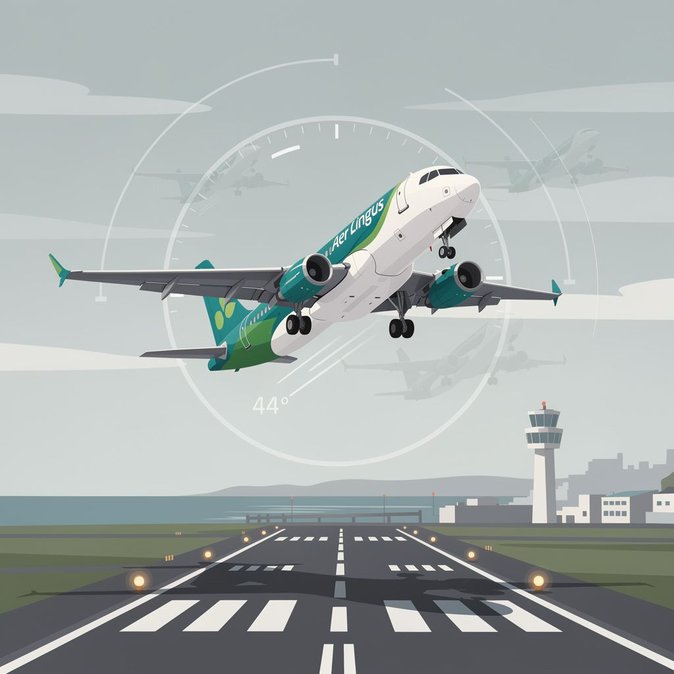
A newly-published Air Accident Investigation Unit (AAIU) report has revealed that an Aer Lingus Airbus A320 carrying 146 passengers banked to 44 degrees and briefly dropped below its assigned altitude during a go-around at Dublin Airport on 14 January 2025. Although the flight landed safely on its second attempt, investigators have categorised the event as an “aircraft-upset” because the jet’s attitude and speed went well outside its certified flight envelope. The findings—shared widely on Irish transport forums overnight—show the crew were high on the glide path and attempted an unusually steep correction that left the aircraft slow and off-course. Two subsequent low-speed warnings activated before the pilots stabilised the climb. No passengers were injured, but the event met the threshold for mandatory reporting under EU Regulation 376/2014. Ireland’s Civil Aviation Authority (IAA) has 24 recommendations, including additional go-around training for A320 crews, a review of Aer Lingus standard operating procedures, and installation of angle-of-attack indicators on older short-haul aircraft. Aer Lingus says it has “fully accepted” the recommendations and will incorporate them into recurrent simulator sessions from September. For business travellers, the immediate impact is operational: Aer Lingus has voluntarily introduced a 30-minute buffer on selected morning rotations to give crews extra briefing time, while Dublin Airport’s slot coordinator has warned airlines that ad-hoc schedule changes could ripple through peak-hour traffic. Travel managers should monitor short-notice timetable updates and advise executives with tight same-day itineraries to build in additional connection time at Dublin. More broadly, the incident may accelerate Ireland’s push to harmonise pilot training standards with EASA’s incoming “upset prevention and recovery training” (UPRT) directive—something corporate safety teams will welcome as trans-Atlantic traffic continues to rebound to record levels.