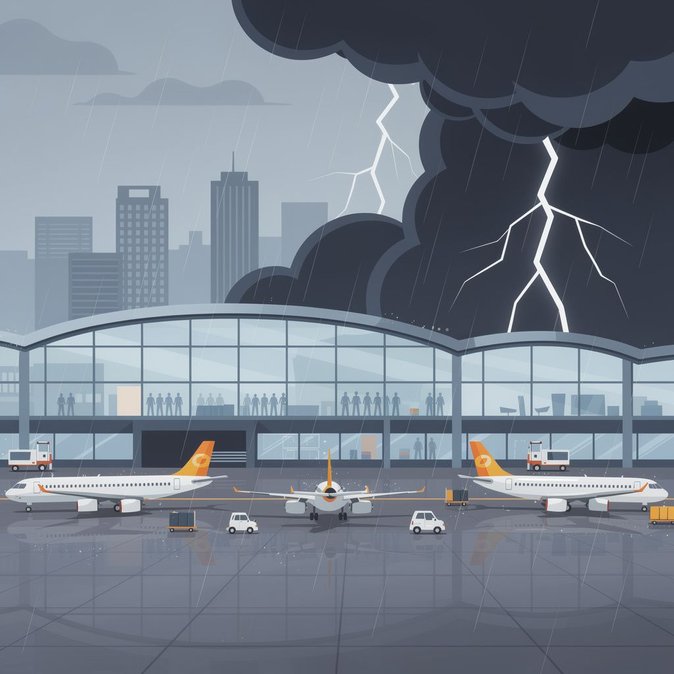
A potent band of thunderstorms rolled through northern Illinois on Saturday, September 19, triggering a Federal Aviation Administration ground-delay program and wiping more than 300 flights off the board at Chicago’s O’Hare International Airport. Midway Airport logged an additional 71 cancellations. Average delays at O’Hare stretched past an hour, according to the Chicago Department of Aviation. With rainfall totals of up to three inches forecast through Sunday, the National Weather Service placed the region under a flood watch, raising the prospect of further disruption. O’Hare is the country’s second-busiest hub, serving as a key connecting point for United and American. When the airport slows, ripple effects spread quickly across the domestic network: aircraft and crews scheduled for afternoon bank flights elsewhere are stranded on the ramp, forcing airlines to play a high-stakes game of schedule Jenga. United pre-emptively waived change fees for travelers rebooking through September 22, while American urged customers to consider alternate hubs such as Dallas-Fort Worth or Charlotte. Business travelers heading to the Midwest for Monday meetings face limited re-accommodation options, as many post-pandemic schedules still run at lower frequencies. Travel managers are advising clients to monitor flight status apps and allow extra ground time—the Kennedy Expressway is also under construction, compounding the hassle. Cargo operators were less affected; most freighter departures occur in the overnight window, after convection is expected to weaken. The storm is the latest reminder that extreme weather—now more common in late-season Midwest patterns—poses a growing threat to just-in-time corporate travel. Companies with critical itineraries are increasingly pairing Global Entry memberships with flexible telepresence options so executives can pivot when a hub like O’Hare blinks.
Source: NBC Chicago